
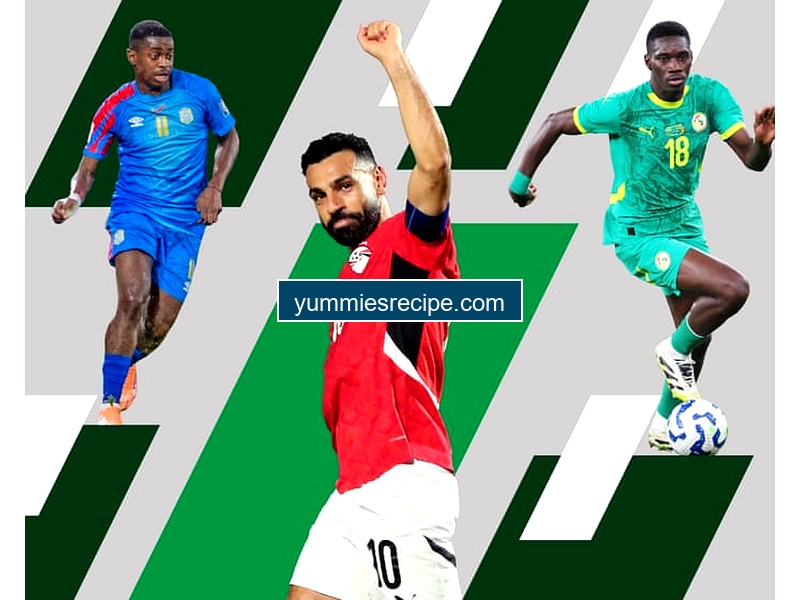
The Bold Claim: The modern football calendar is not merely crowded; it is an active act of cultural vandalism against African football, perpetrated by a European elite that views the continent solely as a strip mine for talent rather than a theatre of glory. To view the Africa Cup of Nations (AFCON) merely as an inconvenience to the Premier League title race is an arrogance that betrays the very spirit of the sport, reducing national pride to a line item on a spreadsheet of fatigue management.
We have arrived at a peculiar and depressing juncture in the history of the beautiful game. As Jonathan Wilson astutely points out, the discourse surrounding Africa’s showpiece event has been hijacked. It has been stripped of its autonomy. In the hushed, plush boardrooms of London and Manchester, and in the frenetic debate of social media, the tournament is no longer discussed as a celebration of a continent’s footballing evolution. Instead, it is framed almost exclusively through the lens of European deprivation.
The Narcissism of the "Big Five" Leagues
Cast your mind back thirty years. When the wider world looked toward African football in the early 1990s—the era of Roger Milla’s dance and Nigeria’s Super Eagles taking flight—there was a sense of wonder. There was a recognition that this was a distinct, vibrant, and essential pillar of the global game. Today, that reverence has eroded, replaced by the cold logic of the asset sheet.
The narrative has shifted from "Who will be crowned King of Africa?" to "How many games will Mohamed Salah miss for Liverpool?" This parochialism is staggering. We are witnessing the utter marginalization of a confederation that represents 54 nations, shunted into the shadows because it dares to interrupt the relentless, churning revenue machine of domestic European leagues.
"Perhaps attitudes are not quite as parochial as they once were, but it remains true that, in England at least, the Africa Cup of Nations is discussed less as a tournament in its own right than in terms of what it means for the Premier League."
This is not an accident of scheduling; it is a reflection of power. The economic gravity of football has shifted so decisively to Western Europe that everything else—even a tournament with nearly 70 years of history—is treated as satellite content, existing only to feed or hinder the main attraction.
A Calendar Built on Sand
The Confederation of African Football (CAF) finds itself in an impossible bind, a Sisyphean struggle against both the elements and the establishment. The desire to move the tournament to the European summer—June and July—was a noble attempt to appease the club giants. Yet, climatology ignores commercial needs. In many parts of Africa, June and July are the height of the rainy season. To play then is to invite waterlogged pitches and turgid football.
So, the tournament returns to January and February, the only logical window for the host nations. And here enters the villain of the piece: FIFA. While the global governing body offers platitudes about the growth of the African game, their actions tell a darker story. The expansion of the Club World Cup and the bloating of the Champions League group stages have devoured the calendar. There is no room left at the inn.
The Statistical Squeeze
- 1957: The inaugural AFCON had only 3 participating teams. The schedule was open; the world was smaller.
- 1990s: The tournament expanded to 12, then 16 teams. European clubs grumbled, but the financial disparity was not yet insurmountable.
- Present Day: A 24-team tournament clashing with a Premier League TV deal worth billions. The friction has turned into a fire.
The Erosion of International Sanctity
This marginalization speaks to a deeper malaise in the sport’s history. There was a time when the International Duty was the pinnacle. To wear the shirt of Ghana, Cameroon, or Egypt was to carry the hopes of millions, a burden heavier and more honorable than any club crest. We are watching that sanctity being eroded by the "Greedy Game."
Players are now placed in an invidious position, torn between the employers who pay their astronomical wages and the nations that gave them their identity. When a manager harrumphs about losing a star player to AFCON, they are subtly questioning that player's priorities. They are asking, "Is your heritage worth more than our next three points?"
It is a question that should never be asked. The Euros are not treated with such disdain. The Copa America is given space to breathe. Only Africa is asked to apologize for its existence.