
Fifty-eight years ago, a factory worker from Dagenham or a docker from Liverpool could walk toward the twin towers of Wembley, part with ten shillings—roughly the price of three pints of mild—and watch Bobby Moore lift the Jules Rimet Trophy. It was a transaction rooted in accessibility; the game belonged to the people who stood on the terraces, their breath visible in the grey London air, united not by bank balance but by birthright. Fast forward to the present day, and the launch of FIFA’s ticket ballot for the 2026 World Cup in the United States, Canada, and Mexico serves as a grim tombstone for that era. With the cheapest seats demanding a minimum of £135, and the realistic cost of attendance spiraling into the thousands, we are witnessing the final, brutal gentrification of international football.
The news that England fans have been given a "kick in the ballots" with these sky-high prices is not merely a complaint about inflation; it is a profound historical shift. We have moved from a time when the World Cup was a carnival of the common man to an era where it is an exclusive gala for the affluent mobile class. The outcry regarding the 2026 tournament is justified, but to the historian’s eye, it is merely the logical conclusion of a project that began decades ago: the conversion of the "supporter" into the "legacy consumer."
The Americanization of the Turnstile
It is perhaps fitting, in a cynical sense, that this pricing structure arrives as the tournament returns to North America. When the World Cup first ventured to the United States in 1994, it was an experiment in commercial scale. Now, in 2026, it is the full realization of the American sports model applied to the global game. In the NFL or the NBA, pricing out the working class is not a bug; it is a feature of the revenue model.
FIFA has observed the Super Bowl—a corporate networking event masquerading as a sporting contest—and salivated. The "tiny proportion" of tickets available in the ballot for regular England fans suggests a deliberate scarcity. The priority is no longer the vocal travelling army that made Italia '90 or France '98 legendary. The priority is the high-net-worth individual who views a World Cup match not as a tribal duty, but as content for a social media feed.
"We are trading the roar of the lion for the polite applause of the shareholder. When you price out the obsessive, the desperate, and the die-hard, you sterilize the very atmosphere that FIFA sells in its marketing packages."
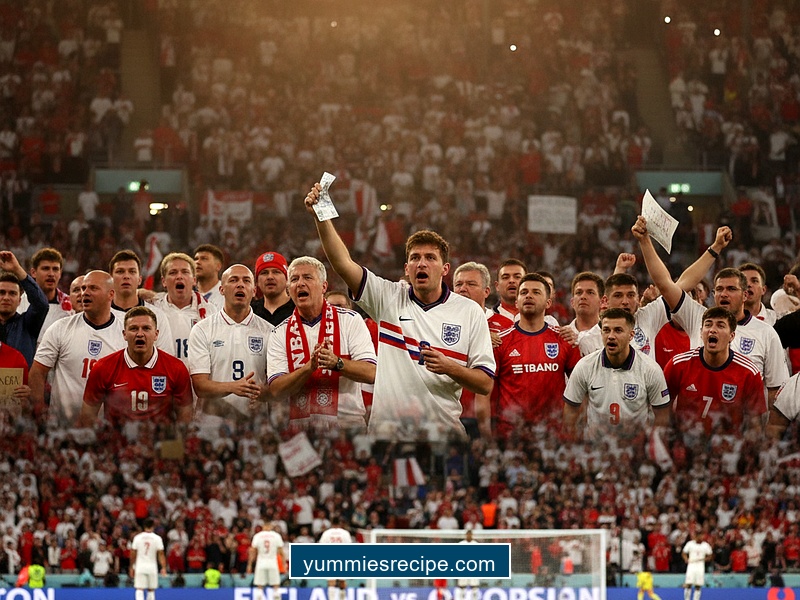
This shift changes the tactical landscape of the stands. The "12th Man" is a cliché, yet historically, England’s travelling support has provided a wall of noise that can intimidate opponents and rouse lethargic players. If the only people in the stadium are those who can afford £135 for a nosebleed seat—plus flights to Miami or Mexico City—the demographic shifts from young, hungry chanters to an older, wealthier, and significantly quieter crowd. The acoustics of the game will change as drastically as the pricing.
A Timeline of Exclusion
To understand the gravity of this £135 price tag, one must look at the trajectory of ticket inflation relative to the average wage. The disconnect has been growing for thirty years, but the curve is now exponential. In the 1970s and 80s, attending a World Cup was a logistical challenge, certainly, but the barrier was rarely the face value of the ticket itself.
- 1966 (England): Final tickets ranged from 10 shillings to £5. Accessible to almost anyone in full-time employment.
- 1990 (Italy): Prices rose, but a generation of young fans still slept in train stations and camped in parks to be there. The adventure was affordable; the luxury was optional.
- 2006 (Germany): The beginning of the corporate squeeze, yet proximity allowed the "fan parks" to thrive, maintaining a connection for those without tickets.
- 2026 (USA/Can/Mex): A £135 base price. Coupled with trans-Atlantic travel and North American hotel rates, the "adventure" is now a luxury purchase comparable to a new car.
What we are seeing is the "Premier League-ification" of the national team. For years, international football remained the last bastion of the democratized game. While Old Trafford and the Emirates became playgrounds for tourists and corporate clients, the England away end retained a gritty, authentic, albeit sometimes rowdy, identity. This ballot structure threatens to dismantle that culture entirely.
The Long-Term Cost of Greed
Does this signify the end of football as the nation's heartbeat? Not immediately. The stadiums in New York and Los Angeles will still be full. The demand for the spectacle is too high, and the global population of affluent football tourists is too large. However, the soul of the sport suffers a slow attrition. When you sever the link between the team and the working-class communities that produce the players—remember, our best talents often come from the concrete cages of South London and the estates of Liverpool, not the country clubs—you create a sterile product.
The "rip-off" described by fans is not just financial; it is emotional robbery. The World Cup is supposed to be the quadrennial gathering of the tribes, a moment where the plumber stands next to the barrister, united in hope and despair. By setting the entry bar so aggressively high, FIFA is effectively curating the crowd, filtering out the grit in favor of the gloss.
A Legacy of Exclusion
If history teaches us anything about the trajectory of sports economics, it is that prices rarely go down. Once the market acce
Fifty-eight years ago, a factory worker from Dagenham or a docker from Liverpool could walk toward the twin towers of Wembley, part with ten shillings—roughly the price of three pints of mild—and watch Bobby Moore lift the Jules Rimet Trophy. It was a transaction rooted in accessibility; the game belonged to the people who stood on the terraces, their breath visible in the grey London air, united not by bank balance but by birthright. Fast forward to the present day, and the launch of FIFA’s ticket ballot for the 2026 World Cup in the United States, Canada, and Mexico serves as a grim tombstone for that era. With the cheapest seats demanding a minimum of £135, and the realistic cost of attendance spiraling into the thousands, we are witnessing the final, brutal gentrification of international football.
The news that England fans have been given a "kick in the ballots" with these sky-high prices is not merely a complaint about inflation; it is a profound historical shift. We have moved from a time when the World Cup was a carnival of the common man to an era where it is an exclusive gala for the affluent mobile class. The outcry regarding the 2026 tournament is justified, but to the historian’s eye, it is merely the logical conclusion of a project that began decades ago: the conversion of the "supporter" into the "legacy consumer."
The Americanization of the Turnstile
It is perhaps fitting, in a cynical sense, that this pricing structure arrives as the tournament returns to North America. When the World Cup first ventured to the United States in 1994, it was an experiment in commercial scale. Now, in 2026, it is the full realization of the American sports model applied to the global game. In the NFL or the NBA, pricing out the working class is not a bug; it is a feature of the revenue model.
FIFA has observed the Super Bowl—a corporate networking event masquerading as a sporting contest—and salivated. The "tiny proportion" of tickets available in the ballot for regular England fans suggests a deliberate scarcity. The priority is no longer the vocal travelling army that made Italia '90 or France '98 legendary. The priority is the high-net-worth individual who views a World Cup match not as a tribal duty, but as content for a social media feed.
"We are trading the roar of the lion for the polite applause of the shareholder. When you price out the obsessive, the desperate, and the die-hard, you sterilize the very atmosphere that FIFA sells in its marketing packages."
This shift changes the tactical landscape of the stands. The "12th Man" is a cliché, yet historically, England’s travelling support has provided a wall of noise that can intimidate opponents and rouse lethargic players. If the only people in the stadium are those who can afford £135 for a nosebleed seat—plus flights to Miami or Mexico City—the demographic shifts from young, hungry chanters to an older, wealthier, and significantly quieter crowd. The acoustics of the game will change as drastically as the pricing.
A Timeline of Exclusion
To understand the gravity of this £135 price tag, one must look at the trajectory of ticket inflation relative to the average wage. The disconnect has been growing for thirty years, but the curve is now exponential. In the 1970s and 80s, attending a World Cup was a logistical challenge, certainly, but the barrier was rarely the face value of the ticket itself.
- 1966 (England): Final tickets ranged from 10 shillings to £5. Accessible to almost anyone in full-time employment.
- 1990 (Italy): Prices rose, but a generation of young fans still slept in train stations and camped in parks to be there. The adventure was affordable; the luxury was optional.
- 2006 (Germany): The beginning of the corporate squeeze, yet proximity allowed the "fan parks" to thrive, maintaining a connection for those without tickets.
- 2026 (USA/Can/Mex): A £135 base price. Coupled with trans-Atlantic travel and North American hotel rates, the "adventure" is now a luxury purchase comparable to a new car.
What we are seeing is the "Premier League-ification" of the national team. For years, international football remained the last bastion of the democratized game. While Old Trafford and the Emirates became playgrounds for tourists and corporate clients, the England away end retained a gritty, authentic, albeit sometimes rowdy, identity. This ballot structure threatens to dismantle that culture entirely.
The Long-Term Cost of Greed
Does this signify the end of football as the nation's heartbeat? Not immediately. The stadiums in New York and Los Angeles will still be full. The demand for the spectacle is too high, and the global population of affluent football tourists is too large. However, the soul of the sport suffers a slow attrition. When you sever the link between the team and the working-class communities that produce the players—remember, our best talents often come from the concrete cages of South London and the estates of Liverpool, not the country clubs—you create a sterile product.
The "rip-off" described by fans is not just financial; it is emotional robbery. The World Cup is supposed to be the quadrennial gathering of the tribes, a moment where the plumber stands next to the barrister, united in hope and despair. By setting the entry bar so aggressively high, FIFA is effectively curating the crowd, filtering out the grit in favor of the gloss.
A Legacy of Exclusion
If history teaches us anything about the trajectory of sports economics, it is that prices rarely go down. Once the market acce