
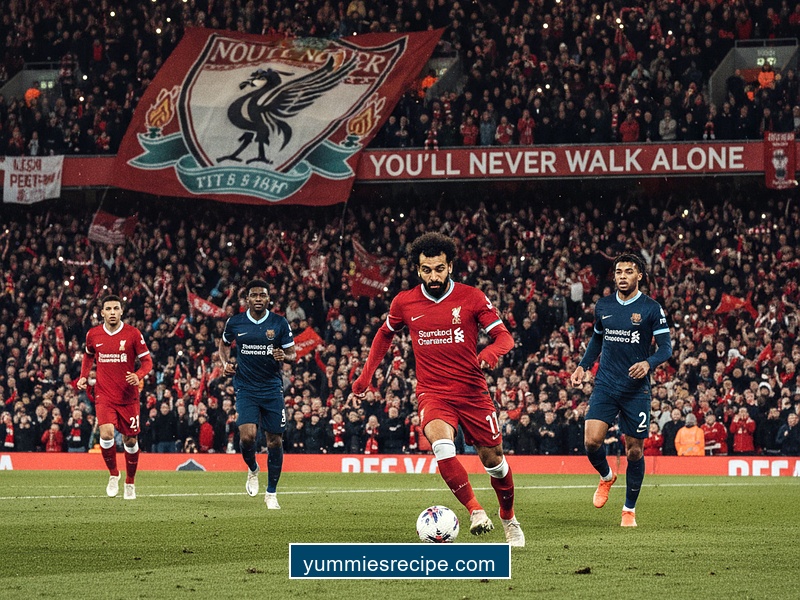
The recording devices were already red-lining, capturing the expectant silence of the press room, before the question truly landed. It hung in the air, heavy with the anxiety that has plagued the Kop for the better part of a year. When Arne Slot finally spoke, his voice didn't carry the booming, emotional resonance of his predecessor, but the cool, calculated logic of a man who has studied the blueprints. "There are no reasons to not want Mohamed Salah to stay," he said. With those eleven words, the Dutchman didn't just answer a transfer rumor; he stepped into a lineage of Anfield decision-making that stretches back to the days of Shankly and Paisley.
We are witnessing a fascinating collision of eras. The impending Friday talks between the manager and the Egyptian King represent more than just a contract negotiation. They represent the eternal struggle between the ruthlessness of time and the defiance of greatness. To understand the gravity of Slot’s declaration, we cannot simply look at the Premier League table. We must look back at the ghosts that line the corridors of Anfield.
The Shadow of the Seventies and the Void
Liverpool Football Club has always existed in a delicate state of succession. The fear gripping the fanbase today—that letting Salah leave creates an unfillable void—is not new. Cast your mind back to the summer of 1977. Kevin Keegan, the superstar of his day, the man with the hair and the flair, departed for Hamburg. The gloom was palpable. How do you replace the irreplaceable? The answer, famously, was Kenny Dalglish. The transition was seamless, almost magical.
However, history also offers darker warnings. When the great teams of the late 80s began to fracture, when age caught up with the likes of Rush and Hansen without adequate heirs in place, the club entered a wilderness that lasted three decades. Arne Slot, a student of the game, seemingly understands this peril. To let Salah walk away when he is still the most potent weapon in the arsenal would be to invite the kind of decline that took Souness and Evans years to wrestle with.
"There are no reasons to not want Mohamed Salah to stay." — Arne Slot
This quote is significant because it rejects the modern obsession with "resale value" and "age profiles" that often plagues FSG’s Moneyball approach. It is a footballing decision, pure and simple. It recalls the wisdom of Bob Paisley, who knew that you don't dismantle a machine while the engine is still purring.
Defying the Dying of the Light
The conventional wisdom of football history dictates that wingers are the first to fade. Their game is built on explosive twitch fibers that degrade as the wrong side of thirty approaches. Yet, looking at Salah, do we see a player in decline? We do not. We see a player who has evolved.
Much like Ryan Giggs shifted from a flying winger to a cerebral playmaker, or how Cristiano Ronaldo morphed into a pure penalty-box predator, Salah is altering his game. Under Slot, he is not just hugging the touchline; he is the creative hub, the pivot point of the attack. By stating he wants Salah to stay, Slot is acknowledging that Salah is physically an outlier—a distinct anomaly in the data.
The Three Pillars of Slot's Logic
- Continuity in Transition: In a season of managerial change, losing the dressing room leader and primary goal scorer simultaneously is a recipe for instability.
- The Output Metric: Regardless of age, Salah remains the statistical outlier in the squad for Goal Creating Actions (GCA).
- The Fear Factor: Opposing full-backs still double-team him. That gravitational pull opens space for Diaz, Jota, and Nunez—space that vanishes if Salah departs.
The Friday Summit: Business or Sentiment?
So, what happens when they sit down on Friday? This meeting is the crossroads. In previous eras, a player like Ian Rush left for Juventus because the financial landscape dictated it, only to return because the grass wasn't greener. Today, the lure is not the prestige of Serie A, but the astronomical wealth of the Saudi Pro League.
Slot’s public vote of confidence puts the ball firmly in the court of the ownership. If the manager—the man hired to steer the ship into a new epoch—says the player is vital, the "sell high" strategy becomes dangerous. It becomes a gamble with the club's competitive soul.
We often talk about the "Liverpool way." It is a philosophy built on collectivism, yes, but it has always required a talisman. Liddell, Keegan, Dalglish, Gerrard. These figures are the tentpoles holding up the canvas. Salah is the last remaining tentpole of the Klopp dynasty. To remove him now, while he is still structurally sound, risks collapsing the entire project before Slot has had time to build his own foundations.
A Defining Moment for the New Regime
Arne Slot has passed the first test of his tenure: he has refused to blink. A weaker manager, or perhaps a more insecure one, might have wanted to clear the decks of the big personalities to assert his own authority. We saw this at Manchester United post-Ferguson, and the results were catastrophic. Slot has chosen the path of wisdom. He recognizes that his own success is inextricably linked to the boots of the Egyptian.
As Friday approaches, the Anfield faithful will wait with bated breath. This is not just about keeping a right-winger for another season. It is about whether Liverpool remains a destination for legends to finish their stories, or becomes a stepping stone for the final payday. Slot has made his move on the chessboard. Now, history waits for the counter-move.
The recording devices were already red-lining, capturing the expectant silence of the press room, before the question truly landed. It hung in the air, heavy with the anxiety that has plagued the Kop for the better part of a year. When Arne Slot finally spoke, his voice didn't carry the booming, emotional resonance of his predecessor, but the cool, calculated logic of a man who has studied the blueprints. "There are no reasons to not want Mohamed Salah to stay," he said. With those eleven words, the Dutchman didn't just answer a transfer rumor; he stepped into a lineage of Anfield decision-making that stretches back to the days of Shankly and Paisley.
We are witnessing a fascinating collision of eras. The impending Friday talks between the manager and the Egyptian King represent more than just a contract negotiation. They represent the eternal struggle between the ruthlessness of time and the defiance of greatness. To understand the gravity of Slot’s declaration, we cannot simply look at the Premier League table. We must look back at the ghosts that line the corridors of Anfield.
The Shadow of the Seventies and the Void
Liverpool Football Club has always existed in a delicate state of succession. The fear gripping the fanbase today—that letting Salah leave creates an unfillable void—is not new. Cast your mind back to the summer of 1977. Kevin Keegan, the superstar of his day, the man with the hair and the flair, departed for Hamburg. The gloom was palpable. How do you replace the irreplaceable? The answer, famously, was Kenny Dalglish. The transition was seamless, almost magical.
However, history also offers darker warnings. When the great teams of the late 80s began to fracture, when age caught up with the likes of Rush and Hansen without adequate heirs in place, the club entered a wilderness that lasted three decades. Arne Slot, a student of the game, seemingly understands this peril. To let Salah walk away when he is still the most potent weapon in the arsenal would be to invite the kind of decline that took Souness and Evans years to wrestle with.
"There are no reasons to not want Mohamed Salah to stay." — Arne Slot
This quote is significant because it rejects the modern obsession with "resale value" and "age profiles" that often plagues FSG’s Moneyball approach. It is a footballing decision, pure and simple. It recalls the wisdom of Bob Paisley, who knew that you don't dismantle a machine while the engine is still purring.
Defying the Dying of the Light
The conventional wisdom of football history dictates that wingers are the first to fade. Their game is built on explosive twitch fibers that degrade as the wrong side of thirty approaches. Yet, looking at Salah, do we see a player in decline? We do not. We see a player who has evolved.
Much like Ryan Giggs shifted from a flying winger to a cerebral playmaker, or how Cristiano Ronaldo morphed into a pure penalty-box predator, Salah is altering his game. Under Slot, he is not just hugging the touchline; he is the creative hub, the pivot point of the attack. By stating he wants Salah to stay, Slot is acknowledging that Salah is physically an outlier—a distinct anomaly in the data.
The Three Pillars of Slot's Logic
- Continuity in Transition: In a season of managerial change, losing the dressing room leader and primary goal scorer simultaneously is a recipe for instability.
- The Output Metric: Regardless of age, Salah remains the statistical outlier in the squad for Goal Creating Actions (GCA).
- The Fear Factor: Opposing full-backs still double-team him. That gravitational pull opens space for Diaz, Jota, and Nunez—space that vanishes if Salah departs.
The Friday Summit: Business or Sentiment?
So, what happens when they sit down on Friday? This meeting is the crossroads. In previous eras, a player like Ian Rush left for Juventus because the financial landscape dictated it, only to return because the grass wasn't greener. Today, the lure is not the prestige of Serie A, but the astronomical wealth of the Saudi Pro League.
Slot’s public vote of confidence puts the ball firmly in the court of the ownership. If the manager—the man hired to steer the ship into a new epoch—says the player is vital, the "sell high" strategy becomes dangerous. It becomes a gamble with the club's competitive soul.
We often talk about the "Liverpool way." It is a philosophy built on collectivism, yes, but it has always required a talisman. Liddell, Keegan, Dalglish, Gerrard. These figures are the tentpoles holding up the canvas. Salah is the last remaining tentpole of the Klopp dynasty. To remove him now, while he is still structurally sound, risks collapsing the entire project before Slot has had time to build his own foundations.
A Defining Moment for the New Regime
Arne Slot has passed the first test of his tenure: he has refused to blink. A weaker manager, or perhaps a more insecure one, might have wanted to clear the decks of the big personalities to assert his own authority. We saw this at Manchester United post-Ferguson, and the results were catastrophic. Slot has chosen the path of wisdom. He recognizes that his own success is inextricably linked to the boots of the Egyptian.
As Friday approaches, the Anfield faithful will wait with bated breath. This is not just about keeping a right-winger for another season. It is about whether Liverpool remains a destination for legends to finish their stories, or becomes a stepping stone for the final payday. Slot has made his move on the chessboard. Now, history waits for the counter-move.