
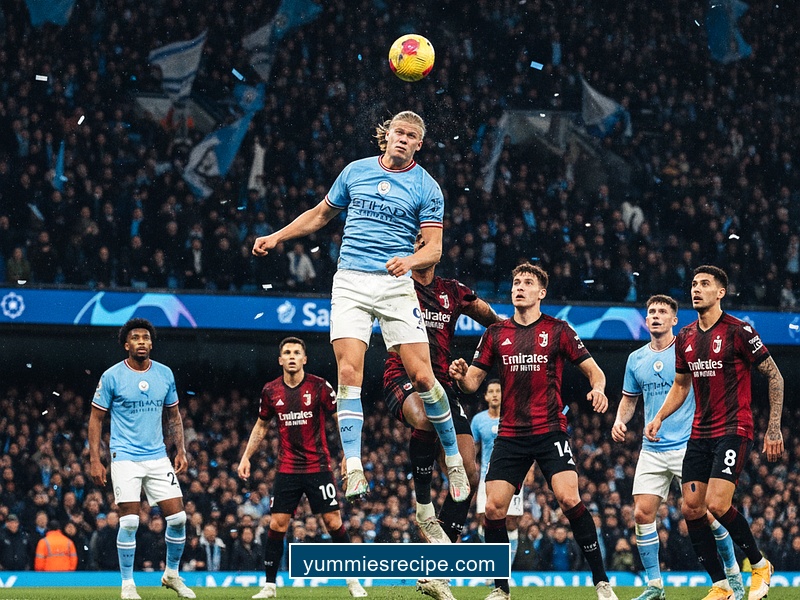
Three years ago, the Premier League was obsessed with the tactical nuances of the 'False Nine', a system where strikers were expected to be selfless decoys, dropping deep to facilitate the brilliance of inverted wingers. The transfer market reflected this obsession; clubs were hunting for the next Roberto Firmino, valuing link-up play over raw output. Today, that era of tactical politeness feels like a distant memory, utterly bulldozed by a singular Nordic phenomenon who has reset the market's parameters and turned the sophisticated art of English defending into a panicked scramble for survival.
We are currently witnessing the normalization of the absurd. Erling Haaland has reached 100 goals for Manchester City in 105 appearances, a statistic so ludicrous it feels like a glitch in the simulation. But if you sit down with scouts and sporting directors in the quiet corners of luxury boxes, away from the TV cameras, they will tell you that the "robot" narrative is lazy. The true value of Haaland—the reason his camp holds all the cards in contract negotiations—isn't found in the spreadsheet. It’s found in the chaos.
The Menu at the Chinese Restaurant
Modern football discourse suffers from data poisoning. We act as if every goal is equal, a mere digit to be filed away in the history books. Yet, when you look at Haaland’s century of strikes, you aren't looking at a manufacturing line; you are looking at a chaotic, varied menu at a Chinese restaurant. You can order whatever you want, and he has a dish for it.
Let's strip away the xG (Expected Goals) for a moment. The "insider" view of Haaland’s game isn't about efficiency; it's about the psychological trauma he inflicts on goalkeepers and center-halves. Take the goal against Chelsea, for instance. A "hapless" Robert Sánchez is caught out, and Haaland doesn't just smash it; he produces a delicate, terrifying lob. It was the footballing equivalent of a heavyweight boxer deciding to paint a watercolor while his opponent is unconscious on the canvas.
"You don't pay 300 million euros for a striker just because he scores tap-ins. You pay it because he makes 6'4" defenders fall over their own feet without even touching them."
That brings us to the Brentford incident involving Kristoffer Ajer. The stats sheet records a goal. The eye test reveals something far more valuable to Manchester City’s brand. Ajer, a competent Premier League defender, essentially collapsed. He wasn't fouled; he was spooked into incoherence. When your mere presence causes professional athletes to lose their motor functions, you have transcended the role of a player and become a market force.
The Leverage in the Locker Room
What does this century of goals actually mean for the dynamics inside the Etihad? Conversations I’ve had with agents circling the club suggest a shift in the hierarchy. Previously, under Guardiola, the "system" was the star. The system was the leverage. If you didn't press, you didn't play. Haaland has broken that leverage.
He allows City to play poorly and win. That is a dangerous drug for a manager, but it’s gold dust for a boardroom. When City negotiates commercial deals now, they aren't just selling success; they are selling the "Viking." The goal against Bournemouth—where he slots it in, tries to look cool climbing the hoardings, and collapses in a fit of giggles—is crucial here. It humanizes the asset.
The Ripple Effect on Recruitment
The implications of Haaland's form are reshaping how rivals construct their squads. Look at Arsenal. The move toward physical monsters like Gabriel and Saliba is a direct response to the Haaland threat. The league is getting bigger, faster, and stronger solely to contain one man.
- Defensive inflation: Prices for center-backs over 6'2" are inflating because teams are desperate for physical parity.
- Tactical regression: Teams are playing deeper lines again, abandoning the high press when City comes to town, purely to deny Haaland the space in behind.
- The backup dilemma: Who on earth wants to sign as Haaland's deputy? Julian Alvarez left because the shadow is too large. This creates a squad depth issue for City moving forward.
The Next Contract: A Billion Dollar Question
Let's look at the future consequences. Real Madrid is always watching, lurking like a shark in shallow water. Haaland’s camp knows that his "brute numbers" are the floor of the negotiation, not the ceiling. The ceiling is defined by those moments of magic—the No. 33 against Arsenal with the flowing hair, the sheer inevitability of his movement.
City is currently operating in a unique window. They have the best striker in the world, perhaps the best pure goalscorer in history, and yet there is a lingering feeling that we haven't seen the tactical peak. Guardiola is constantly tweaking, trying to find the balance between Haaland's directness and the team's cont
Three years ago, the Premier League was obsessed with the tactical nuances of the 'False Nine', a system where strikers were expected to be selfless decoys, dropping deep to facilitate the brilliance of inverted wingers. The transfer market reflected this obsession; clubs were hunting for the next Roberto Firmino, valuing link-up play over raw output. Today, that era of tactical politeness feels like a distant memory, utterly bulldozed by a singular Nordic phenomenon who has reset the market's parameters and turned the sophisticated art of English defending into a panicked scramble for survival.
We are currently witnessing the normalization of the absurd. Erling Haaland has reached 100 goals for Manchester City in 105 appearances, a statistic so ludicrous it feels like a glitch in the simulation. But if you sit down with scouts and sporting directors in the quiet corners of luxury boxes, away from the TV cameras, they will tell you that the "robot" narrative is lazy. The true value of Haaland—the reason his camp holds all the cards in contract negotiations—isn't found in the spreadsheet. It’s found in the chaos.
The Menu at the Chinese Restaurant
Modern football discourse suffers from data poisoning. We act as if every goal is equal, a mere digit to be filed away in the history books. Yet, when you look at Haaland’s century of strikes, you aren't looking at a manufacturing line; you are looking at a chaotic, varied menu at a Chinese restaurant. You can order whatever you want, and he has a dish for it.
Let's strip away the xG (Expected Goals) for a moment. The "insider" view of Haaland’s game isn't about efficiency; it's about the psychological trauma he inflicts on goalkeepers and center-halves. Take the goal against Chelsea, for instance. A "hapless" Robert Sánchez is caught out, and Haaland doesn't just smash it; he produces a delicate, terrifying lob. It was the footballing equivalent of a heavyweight boxer deciding to paint a watercolor while his opponent is unconscious on the canvas.
"You don't pay 300 million euros for a striker just because he scores tap-ins. You pay it because he makes 6'4" defenders fall over their own feet without even touching them."
That brings us to the Brentford incident involving Kristoffer Ajer. The stats sheet records a goal. The eye test reveals something far more valuable to Manchester City’s brand. Ajer, a competent Premier League defender, essentially collapsed. He wasn't fouled; he was spooked into incoherence. When your mere presence causes professional athletes to lose their motor functions, you have transcended the role of a player and become a market force.
The Leverage in the Locker Room
What does this century of goals actually mean for the dynamics inside the Etihad? Conversations I’ve had with agents circling the club suggest a shift in the hierarchy. Previously, under Guardiola, the "system" was the star. The system was the leverage. If you didn't press, you didn't play. Haaland has broken that leverage.
He allows City to play poorly and win. That is a dangerous drug for a manager, but it’s gold dust for a boardroom. When City negotiates commercial deals now, they aren't just selling success; they are selling the "Viking." The goal against Bournemouth—where he slots it in, tries to look cool climbing the hoardings, and collapses in a fit of giggles—is crucial here. It humanizes the asset.
The Ripple Effect on Recruitment
The implications of Haaland's form are reshaping how rivals construct their squads. Look at Arsenal. The move toward physical monsters like Gabriel and Saliba is a direct response to the Haaland threat. The league is getting bigger, faster, and stronger solely to contain one man.
- Defensive inflation: Prices for center-backs over 6'2" are inflating because teams are desperate for physical parity.
- Tactical regression: Teams are playing deeper lines again, abandoning the high press when City comes to town, purely to deny Haaland the space in behind.
- The backup dilemma: Who on earth wants to sign as Haaland's deputy? Julian Alvarez left because the shadow is too large. This creates a squad depth issue for City moving forward.
The Next Contract: A Billion Dollar Question
Let's look at the future consequences. Real Madrid is always watching, lurking like a shark in shallow water. Haaland’s camp knows that his "brute numbers" are the floor of the negotiation, not the ceiling. The ceiling is defined by those moments of magic—the No. 33 against Arsenal with the flowing hair, the sheer inevitability of his movement.
City is currently operating in a unique window. They have the best striker in the world, perhaps the best pure goalscorer in history, and yet there is a lingering feeling that we haven't seen the tactical peak. Guardiola is constantly tweaking, trying to find the balance between Haaland's directness and the team's cont