
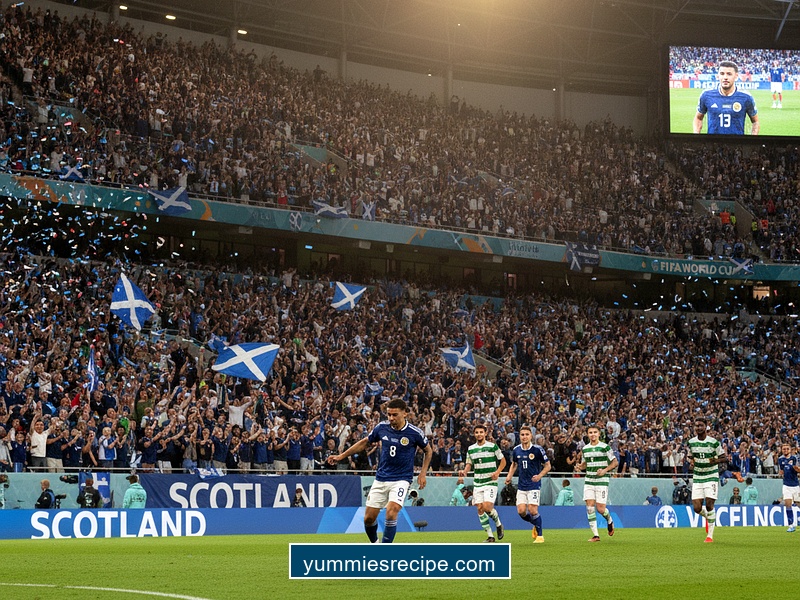
The Stat: Nine thousand, one hundred and twenty-five days. That is the approximate, agonizing chasm of time that separates Craig Burley’s red card against Morocco in Saint-Étienne from the moment the whistle blows against Haiti on June 14. For a nation that once viewed qualification as a birthright, nearly a quarter of a century of exile isn’t just a dry spell; it is a geological epoch of failure.
So, the BBC has secured the rights. We should be popping the champagne, right? We should be celebrating the return of the Tartan Army to free-to-air television on the grandest stage. But before we get swept away in the rom-com narrative of the "plucky Scots returning to the fold," we need to have an uncomfortable conversation about what this broadcast deal actually represents, and the terrifying pressure it places on a squad living in the shadow of ghosts.
The Stockholm Syndrome of Scottish Football
Let’s cut through the nostalgia. The fact that the BBC picking up these games is headline news is, in itself, an indictment of our sporting landscape. For decades, the Scottish public has been treated like second-class citizens by broadcasters and administrators alike, forced to hunt for streams or pay exorbitant subscriptions to watch our national team stumble through qualifiers against nations with populations smaller than Glasgow.
"We have become so accustomed to starvation that a crust of bread looks like a banquet. This deal isn't a gift; it's the bare minimum required to keep the sport alive in the national consciousness."
By broadcasting the opener against Haiti and the glamour tie against Brazil, the BBC is finally fulfilling its public service remit. But don't mistake this for benevolence. They know the numbers. They know that an entire generation of Scots has never seen their country play a World Cup match on terrestrial television. They are banking on our desperation. They are monetizing our hope. And frankly, we are going to let them, because the alternative—silence—is unbearable.
Haiti: The Banana Skin from Hell
Look at the fixture list. Haiti. On paper, it looks like the perfect ease-in, the gentle welcome back party the SFA would have hand-picked. But anyone who understands the fragile psyche of Scottish football knows this is a nightmare scenario disguised as a gift.
- The Expectation Gap: If we play Brazil and lose, it’s heroic failure. If we play Haiti and draw, it’s a national inquest.
- The History of Hubris: Remember Peru in '78? Remember Costa Rica in '90? We have a black belt in underestimating opponents from the Americas.
- The Media Circus: With the BBC beaming this into every living room, the scrutiny will be forensic. A misplaced pass isn't just a mistake; it's a meme within seconds.
Haiti will be organized, physical, and utterly unburdened by the neurotic history that weighs down every Scottish jersey. They are playing a football match; Scotland is playing against 25 years of trauma. That is not a level playing field.
The Brazilian Illusion and the English Shadow
Then there is Brazil. The sheer romanticism of it is intoxicating. The canary yellow against the dark blue. It evokes memories of 1982, of Narey’s toe-poke, of a time when we stood toe-to-toe with giants. But nostalgia is a dangerous drug. We cannot approach the Brazil game as tourists happy to swap shirts. If the BBC coverage turns into a eulogy for "glorious failure" before a ball is even kicked, turn the TV off. We need to stop fetishizing our defeats against top-tier nations.
And let’s address the elephant in the room—or rather, the lion in the schedule. The deal includes England’s group match against Ghana. Even in our moment of triumph, in our return to the sun, we are tethered to the neighbors. It serves as a jarring reality check. While we treat qualification as a halley’s comet event—a once-in-a-lifetime phenomenon—England treats the group stages as a warm-up.
The Verdict: Demand More Than Just Attendance
This broadcasting deal is significant, yes. It brings the national team back to the masses, removing the paywall barrier that has gentrified the support base. It allows a kid in Dundee or Dumfries to watch their heroes without needing a Sky subscription or a VPN. That matters.
But as we sit down on June 14, let’s not just be grateful to be there. The "Just Happy to Be Here" attitude died in 1998. It has to. If this tournament is treated as a victory lap simply for qualifying, we have learned nothing from the wilderness years. The BBC cameras are rolling, the world is watching, and the excuses have run out.
Scotland doesn't need a party; Scotland needs a win. Anything less is just high-definition heartbreak.
The Stat: Nine thousand, one hundred and twenty-five days. That is the approximate, agonizing chasm of time that separates Craig Burley’s red card against Morocco in Saint-Étienne from the moment the whistle blows against Haiti on June 14. For a nation that once viewed qualification as a birthright, nearly a quarter of a century of exile isn’t just a dry spell; it is a geological epoch of failure.
So, the BBC has secured the rights. We should be popping the champagne, right? We should be celebrating the return of the Tartan Army to free-to-air television on the grandest stage. But before we get swept away in the rom-com narrative of the "plucky Scots returning to the fold," we need to have an uncomfortable conversation about what this broadcast deal actually represents, and the terrifying pressure it places on a squad living in the shadow of ghosts.
The Stockholm Syndrome of Scottish Football
Let’s cut through the nostalgia. The fact that the BBC picking up these games is headline news is, in itself, an indictment of our sporting landscape. For decades, the Scottish public has been treated like second-class citizens by broadcasters and administrators alike, forced to hunt for streams or pay exorbitant subscriptions to watch our national team stumble through qualifiers against nations with populations smaller than Glasgow.
"We have become so accustomed to starvation that a crust of bread looks like a banquet. This deal isn't a gift; it's the bare minimum required to keep the sport alive in the national consciousness."
By broadcasting the opener against Haiti and the glamour tie against Brazil, the BBC is finally fulfilling its public service remit. But don't mistake this for benevolence. They know the numbers. They know that an entire generation of Scots has never seen their country play a World Cup match on terrestrial television. They are banking on our desperation. They are monetizing our hope. And frankly, we are going to let them, because the alternative—silence—is unbearable.
Haiti: The Banana Skin from Hell
Look at the fixture list. Haiti. On paper, it looks like the perfect ease-in, the gentle welcome back party the SFA would have hand-picked. But anyone who understands the fragile psyche of Scottish football knows this is a nightmare scenario disguised as a gift.
- The Expectation Gap: If we play Brazil and lose, it’s heroic failure. If we play Haiti and draw, it’s a national inquest.
- The History of Hubris: Remember Peru in '78? Remember Costa Rica in '90? We have a black belt in underestimating opponents from the Americas.
- The Media Circus: With the BBC beaming this into every living room, the scrutiny will be forensic. A misplaced pass isn't just a mistake; it's a meme within seconds.
Haiti will be organized, physical, and utterly unburdened by the neurotic history that weighs down every Scottish jersey. They are playing a football match; Scotland is playing against 25 years of trauma. That is not a level playing field.
The Brazilian Illusion and the English Shadow
Then there is Brazil. The sheer romanticism of it is intoxicating. The canary yellow against the dark blue. It evokes memories of 1982, of Narey’s toe-poke, of a time when we stood toe-to-toe with giants. But nostalgia is a dangerous drug. We cannot approach the Brazil game as tourists happy to swap shirts. If the BBC coverage turns into a eulogy for "glorious failure" before a ball is even kicked, turn the TV off. We need to stop fetishizing our defeats against top-tier nations.
And let’s address the elephant in the room—or rather, the lion in the schedule. The deal includes England’s group match against Ghana. Even in our moment of triumph, in our return to the sun, we are tethered to the neighbors. It serves as a jarring reality check. While we treat qualification as a halley’s comet event—a once-in-a-lifetime phenomenon—England treats the group stages as a warm-up.
The Verdict: Demand More Than Just Attendance
This broadcasting deal is significant, yes. It brings the national team back to the masses, removing the paywall barrier that has gentrified the support base. It allows a kid in Dundee or Dumfries to watch their heroes without needing a Sky subscription or a VPN. That matters.
But as we sit down on June 14, let’s not just be grateful to be there. The "Just Happy to Be Here" attitude died in 1998. It has to. If this tournament is treated as a victory lap simply for qualifying, we have learned nothing from the wilderness years. The BBC cameras are rolling, the world is watching, and the excuses have run out.
Scotland doesn't need a party; Scotland needs a win. Anything less is just high-definition heartbreak.