
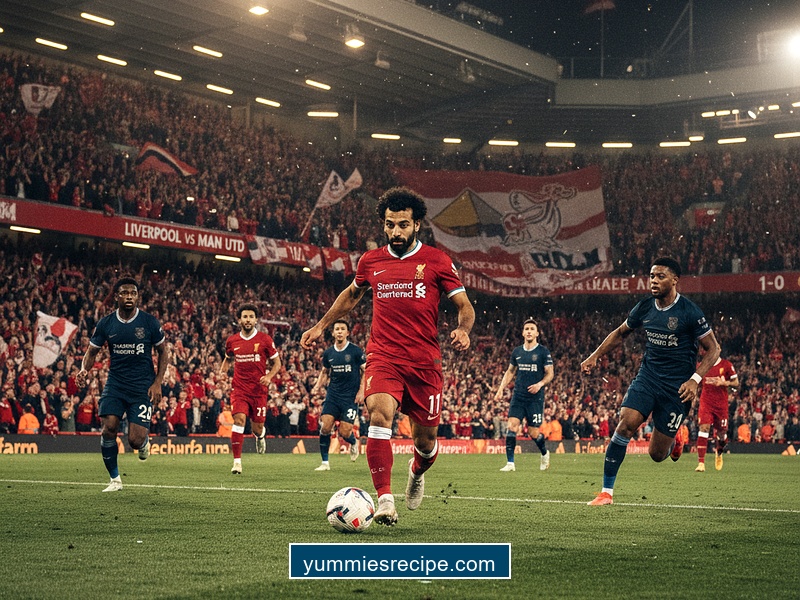
Have you ever tried to calculate the exact market valuation of hope—not the abstract concept, but the tangible, crushing weight of expectation carried by one man for a population of 110 million people? While the statisticians at Anfield crunch the xG and the pressing intensity numbers to determine if Mohamed Salah is worth a contract extension past his 33rd birthday, they are missing the metric that actually matters. The story isn't about how a boy from a farming village became a star; it’s about how that specific journey created a player with more leverage than any ownership group can handle.
We often talk about "marketability" in the Premier League as if it's just about selling shirts in the megastore. But when BBC Sport took cameras into Nagrig, deep in the Egyptian Delta, they didn't just capture a biography. They captured the receipt for Salah’s career. The foundation of his current standoff with Liverpool’s hierarchy isn't his goal tally—it’s the dust of that village.
The Economics of the "Dusty Road"
Let's cut through the romance for a second. The narrative of Salah taking five buses and traveling nine hours a day to train in Cairo is inspiring, yes. But from an insider's perspective, this is a distinct psychological profile that scouts kill for but rarely find. Most modern wingers are products of sanitized academies, manicured on 4G pitches from age six.
Salah is different. That commute forged a mental resilience that makes the pressure of a title race at Anfield look like a holiday. When you analyze his contract negotiations, you have to understand that this is a man who knows the value of labor in its rawest form. He isn't holding out for an extra £50k a week just to buy another watch. He is holding out for respect commensurate with the burden he carries.
"In Egypt, he isn't just a footballer. He is the economy. He is the mood of the nation. When Liverpool negotiates with Salah, they aren't negotiating with an agent; they are negotiating with a cultural movement."
This background creates a "God-complex" dynamic that is incredibly difficult for a manager to control. How does Arne Slot tell a living deity to track back against Ipswich Town? The hierarchy at Liverpool is terrified of the day Salah leaves, not just because of the goals, but because the club loses its foothold in the entire MENA (Middle East and North Africa) region. That farming village in Gharbia Governorate is effectively a major shareholder in Liverpool’s global brand equity.
The Saudi Shadow and the 2025 Dilemma
Here is where the rubber meets the road. The Public Investment Fund (PIF) of Saudi Arabia views Salah as the final piece of their jigsaw. They don't care about his pressing stats; they care about his face on a billboard in Riyadh. The rumors I’m hearing suggest that the offers prepared are not just record-breaking; they are effectively blank checks designed to test the resolve of a man who grew up with nothing.
Why Nagrig Matters in the Transfer Market
However, sources close to the player's camp suggest a counter-intuitive point. Because Salah built himself up from that village to the pinnacle of Europe, he is obsessed with legacy, not just liquidity. Leaving for the Saudi Pro League while he is still arguably the best right-winger in the world would feel like a concession. It would be an admission that the journey is over.
- The Legacy Factor: Staying in Europe cements his status as the greatest African player of all time, surpassing Weah and Eto'o in longevity at the top level.
- The Physical Data: His fitness metrics (recovery speed, sprint distance) are still in the top 5% of the league, defying the usual age curve.
- The Brand Leverage: He generates more commercial revenue individually than most mid-table Premier League clubs do collectively.
FSG knows this. They are playing a dangerous game of chicken. They are banking on Salah’s competitive fire—forged in those long bus rides to Cairo—keeping him at Anfield on reduced terms, or at least short-term deals. But if they disrespect the "Icon," they risk a fan revolt that would make the Super League protests look like a tea party.
Locker Room Dynamics: The Slot Era
Look at the current squad. You have youngsters like Harvey Elliott and new signings trying to make a name for themselves. Then you have Salah. He walks into that dressing room not just as a teammate, but as a living monument. This creates a tactical imbalance.
Under Klopp, the "Egyptian King" persona was indulged because the output was undeniable. Under a new regime, discipline is paramount. Does Salah still track back? Does he press with the same hunger he had when he was trying to escape Nagrig? The data says yes, but the body language sometimes says "I have earned the right to walk."
There is a whisper in the industry that Liverpool is quietly preparing for life post-Salah. They are looking at dynamic, younger wingers who don't carry the weight of a nation on their backs. But replacing the goals is the easy part. How do you replace the aura?
The story of the boy from the farming village is heartwarming for the BBC documentaries. But for the Liverpool board, it is a terrifying reminder of what they are about to lose. They aren't just losing a player; they are losing a global ambassador who built an empire from nothing. The dusty streets of Nagrig didn't just make a footballer; they created the most powerful leverage tool in modern sports history.
Have you ever tried to calculate the exact market valuation of hope—not the abstract concept, but the tangible, crushing weight of expectation carried by one man for a population of 110 million people? While the statisticians at Anfield crunch the xG and the pressing intensity numbers to determine if Mohamed Salah is worth a contract extension past his 33rd birthday, they are missing the metric that actually matters. The story isn't about how a boy from a farming village became a star; it’s about how that specific journey created a player with more leverage than any ownership group can handle.
We often talk about "marketability" in the Premier League as if it's just about selling shirts in the megastore. But when BBC Sport took cameras into Nagrig, deep in the Egyptian Delta, they didn't just capture a biography. They captured the receipt for Salah’s career. The foundation of his current standoff with Liverpool’s hierarchy isn't his goal tally—it’s the dust of that village.
The Economics of the "Dusty Road"
Let's cut through the romance for a second. The narrative of Salah taking five buses and traveling nine hours a day to train in Cairo is inspiring, yes. But from an insider's perspective, this is a distinct psychological profile that scouts kill for but rarely find. Most modern wingers are products of sanitized academies, manicured on 4G pitches from age six.
Salah is different. That commute forged a mental resilience that makes the pressure of a title race at Anfield look like a holiday. When you analyze his contract negotiations, you have to understand that this is a man who knows the value of labor in its rawest form. He isn't holding out for an extra £50k a week just to buy another watch. He is holding out for respect commensurate with the burden he carries.
"In Egypt, he isn't just a footballer. He is the economy. He is the mood of the nation. When Liverpool negotiates with Salah, they aren't negotiating with an agent; they are negotiating with a cultural movement."
This background creates a "God-complex" dynamic that is incredibly difficult for a manager to control. How does Arne Slot tell a living deity to track back against Ipswich Town? The hierarchy at Liverpool is terrified of the day Salah leaves, not just because of the goals, but because the club loses its foothold in the entire MENA (Middle East and North Africa) region. That farming village in Gharbia Governorate is effectively a major shareholder in Liverpool’s global brand equity.
The Saudi Shadow and the 2025 Dilemma
Here is where the rubber meets the road. The Public Investment Fund (PIF) of Saudi Arabia views Salah as the final piece of their jigsaw. They don't care about his pressing stats; they care about his face on a billboard in Riyadh. The rumors I’m hearing suggest that the offers prepared are not just record-breaking; they are effectively blank checks designed to test the resolve of a man who grew up with nothing.
Why Nagrig Matters in the Transfer Market
However, sources close to the player's camp suggest a counter-intuitive point. Because Salah built himself up from that village to the pinnacle of Europe, he is obsessed with legacy, not just liquidity. Leaving for the Saudi Pro League while he is still arguably the best right-winger in the world would feel like a concession. It would be an admission that the journey is over.
- The Legacy Factor: Staying in Europe cements his status as the greatest African player of all time, surpassing Weah and Eto'o in longevity at the top level.
- The Physical Data: His fitness metrics (recovery speed, sprint distance) are still in the top 5% of the league, defying the usual age curve.
- The Brand Leverage: He generates more commercial revenue individually than most mid-table Premier League clubs do collectively.
FSG knows this. They are playing a dangerous game of chicken. They are banking on Salah’s competitive fire—forged in those long bus rides to Cairo—keeping him at Anfield on reduced terms, or at least short-term deals. But if they disrespect the "Icon," they risk a fan revolt that would make the Super League protests look like a tea party.
Locker Room Dynamics: The Slot Era
Look at the current squad. You have youngsters like Harvey Elliott and new signings trying to make a name for themselves. Then you have Salah. He walks into that dressing room not just as a teammate, but as a living monument. This creates a tactical imbalance.
Under Klopp, the "Egyptian King" persona was indulged because the output was undeniable. Under a new regime, discipline is paramount. Does Salah still track back? Does he press with the same hunger he had when he was trying to escape Nagrig? The data says yes, but the body language sometimes says "I have earned the right to walk."
There is a whisper in the industry that Liverpool is quietly preparing for life post-Salah. They are looking at dynamic, younger wingers who don't carry the weight of a nation on their backs. But replacing the goals is the easy part. How do you replace the aura?
The story of the boy from the farming village is heartwarming for the BBC documentaries. But for the Liverpool board, it is a terrifying reminder of what they are about to lose. They aren't just losing a player; they are losing a global ambassador who built an empire from nothing. The dusty streets of Nagrig didn't just make a footballer; they created the most powerful leverage tool in modern sports history.