
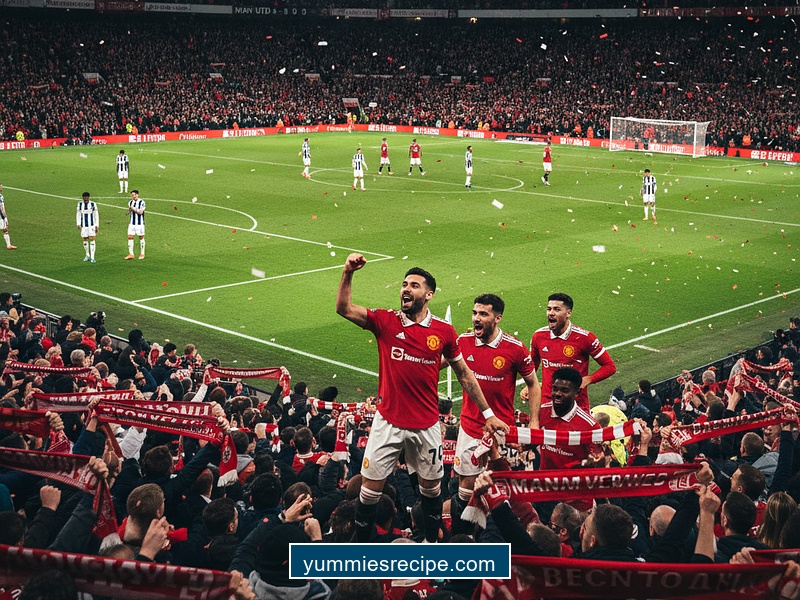
The Scene: The final whistle at Old Trafford didn’t trigger the guttural, earth-shaking roar reminiscent of the Ferguson era. Instead, what swirled around the Theatre of Dreams was the collective exhale of 73,000 people realizing they wouldn't have to endure a week of crisis talks on talk radio. As the players trudged toward the tunnel—clapping the Stretford End with the weariness of men who just defused a bomb rather than won a football match—Erik ten Hag stood near the technical area. He wasn't punching the air. He was adjusting his cuffs, his face betraying nothing, fully aware that in the directors' box, the INEOS entourage was analyzing metrics far more complex than the 3-0 scoreline flashing on the scoreboard.
Papering Over the Cracks or a Genuine Pivot?
Let’s cut through the noise of the match report. Yes, Manchester United have clawed their way back into the top six. Yes, this was statistically their most emphatic victory of the campaign. But if you think the power brokers in the executive suites are uncorking the vintage champagne, you haven’t been paying attention to the mood music coming out of Carrington.
From what my sources tell me, the skepticism regarding the long-term viability of this tactical setup hasn't vanished because of ninety good minutes. The "insider" view—shared by agents and rival sporting directors alike—is that United remain a team built on moments, not a system. They rely on individual brilliance to bail out structural deficiencies. When it works, it looks like a resurgence. When it fails, it looks like a catastrophe.
"They are the most dangerous team in the league when they have nothing to lose, and the most fragile when they have something to protect. That isn't a strategy; it's a psychological condition." – A leading Premier League Scout.
This victory buys time—the most expensive commodity in football—but it doesn't buy security. The chatter in the industry suggests that the summer transfer strategy is already being plotted with contingencies that don't necessarily center around the current status quo. The hierarchy is looking for sustainability, and a rollercoaster season of "biggest win" followed by "shock defeat" is exactly the kind of volatility the new ownership hates.
The Financial Guillotine: Why Top Six Isn't Enough
We need to talk about the money. While fans debate the double pivot or the pressing triggers, the accountants are sweating over the Profit and Sustainability Rules (PSR). Moving into the top six is a nice aesthetic for the league table, but the difference in revenue between the Europa League and the Champions League is the difference between signing a marquee striker and shopping in the bargain bin next July.
The implications of this result are massive, but only if it serves as a launchpad. If United settle for sixth, the financial constraints will tighten like a noose. The club carries a wage bill designed for European royalty, yet they are delivering performances akin to the landed gentry. This disconnect is unsustainable.
- Revenue Gap: Missing the UCL costs the club upwards of £40m in broadcast revenue and prize money.
- Sponsorship Clauses: Certain kit deals have penalty clauses triggered by successive failures to qualify for Europe's elite competition.
- Squad Value: Players on high wages with diminishing resale value become immovable assets without the allure of Champions League football.
The board knows this. That's why the pressure hasn't lifted. A single win against obliging opposition doesn't balance the books. It merely keeps the creditors—both financial and emotional—at bay for another week.
The Locker Room Ecosystem
Inside the dressing room, the dynamic is shifting. Sources close to the squad suggest a split personality within the group. There is the faction that thrives on the chaos—the players who need the adrenaline of a "must-win" game to actually sprint back on defense. Then there is the faction that is exhausted by the constant drama.
This victory provides a dopamine hit, but does it build trust? Not necessarily. Trust is built when you go away to a mid-table grinder on a rainy Tuesday and win 1-0 without conceding a shot on target. United haven't done that consistently in years. The players know that one bad result—a defensive lapse, a goalkeeper error, a tactical misstep—will bring the vultures circling back immediately.
The Fragility Factor
Is a bad result just around the corner? Statistically, yes. United’s underlying numbers often suggest they are overperforming in attack and getting lucky in defense. When you rely on your goalkeeper to make four world-class saves per game, you aren't controlling the match; you're surviving it. This "biggest win of the season" feels less like a turning of the tide and more like the ocean drawing back before a tsunami. The tactical landscape hasn't fundamentally changed. The midfield still gets bypassed too easily in transition, and the press is often disjointed.
Until Ten Hag—or his successor—fixes the space between the defensive line and the midfield pivot, these high-scoring wins will remain anomalies rather than the standard. The Premier League is ruthless; it punishes structural weakness eventually. You can't outscore your own flaws forever.
The Verdict: Beware the False Dawn
We have been here before. Think back to the Solskjaer streaks, or the early months of the Ten Hag reign. The narrative cycle at Manchester United is nauseatingly predictable: Crisis -> Resurgence -> Hope -> Collapse. We are currently in the "Resurgence" phase, rapidly approaching "Hope."
But the smart money isn't buying the hype just yet. The market knows that this squad is still three or four elite pieces away from challenging City or Arsenal. This win was a band-aid on a bullet wound. It stops the bleeding, it looks better for the cameras, but the underlying trauma remains untreated.
So, enjoy the view from the top six, United fans. But keep one eye on the rear-view mirror. In this league, objects are closer than they appear, and the next crisis is already warming up on the sideline, waiting to be subbed in.
The Scene: The final whistle at Old Trafford didn’t trigger the guttural, earth-shaking roar reminiscent of the Ferguson era. Instead, what swirled around the Theatre of Dreams was the collective exhale of 73,000 people realizing they wouldn't have to endure a week of crisis talks on talk radio. As the players trudged toward the tunnel—clapping the Stretford End with the weariness of men who just defused a bomb rather than won a football match—Erik ten Hag stood near the technical area. He wasn't punching the air. He was adjusting his cuffs, his face betraying nothing, fully aware that in the directors' box, the INEOS entourage was analyzing metrics far more complex than the 3-0 scoreline flashing on the scoreboard.
Papering Over the Cracks or a Genuine Pivot?
Let’s cut through the noise of the match report. Yes, Manchester United have clawed their way back into the top six. Yes, this was statistically their most emphatic victory of the campaign. But if you think the power brokers in the executive suites are uncorking the vintage champagne, you haven’t been paying attention to the mood music coming out of Carrington.
From what my sources tell me, the skepticism regarding the long-term viability of this tactical setup hasn't vanished because of ninety good minutes. The "insider" view—shared by agents and rival sporting directors alike—is that United remain a team built on moments, not a system. They rely on individual brilliance to bail out structural deficiencies. When it works, it looks like a resurgence. When it fails, it looks like a catastrophe.
"They are the most dangerous team in the league when they have nothing to lose, and the most fragile when they have something to protect. That isn't a strategy; it's a psychological condition." – A leading Premier League Scout.
This victory buys time—the most expensive commodity in football—but it doesn't buy security. The chatter in the industry suggests that the summer transfer strategy is already being plotted with contingencies that don't necessarily center around the current status quo. The hierarchy is looking for sustainability, and a rollercoaster season of "biggest win" followed by "shock defeat" is exactly the kind of volatility the new ownership hates.
The Financial Guillotine: Why Top Six Isn't Enough
We need to talk about the money. While fans debate the double pivot or the pressing triggers, the accountants are sweating over the Profit and Sustainability Rules (PSR). Moving into the top six is a nice aesthetic for the league table, but the difference in revenue between the Europa League and the Champions League is the difference between signing a marquee striker and shopping in the bargain bin next July.
The implications of this result are massive, but only if it serves as a launchpad. If United settle for sixth, the financial constraints will tighten like a noose. The club carries a wage bill designed for European royalty, yet they are delivering performances akin to the landed gentry. This disconnect is unsustainable.
- Revenue Gap: Missing the UCL costs the club upwards of £40m in broadcast revenue and prize money.
- Sponsorship Clauses: Certain kit deals have penalty clauses triggered by successive failures to qualify for Europe's elite competition.
- Squad Value: Players on high wages with diminishing resale value become immovable assets without the allure of Champions League football.
The board knows this. That's why the pressure hasn't lifted. A single win against obliging opposition doesn't balance the books. It merely keeps the creditors—both financial and emotional—at bay for another week.
The Locker Room Ecosystem
Inside the dressing room, the dynamic is shifting. Sources close to the squad suggest a split personality within the group. There is the faction that thrives on the chaos—the players who need the adrenaline of a "must-win" game to actually sprint back on defense. Then there is the faction that is exhausted by the constant drama.
This victory provides a dopamine hit, but does it build trust? Not necessarily. Trust is built when you go away to a mid-table grinder on a rainy Tuesday and win 1-0 without conceding a shot on target. United haven't done that consistently in years. The players know that one bad result—a defensive lapse, a goalkeeper error, a tactical misstep—will bring the vultures circling back immediately.
The Fragility Factor
Is a bad result just around the corner? Statistically, yes. United’s underlying numbers often suggest they are overperforming in attack and getting lucky in defense. When you rely on your goalkeeper to make four world-class saves per game, you aren't controlling the match; you're surviving it. This "biggest win of the season" feels less like a turning of the tide and more like the ocean drawing back before a tsunami. The tactical landscape hasn't fundamentally changed. The midfield still gets bypassed too easily in transition, and the press is often disjointed.
Until Ten Hag—or his successor—fixes the space between the defensive line and the midfield pivot, these high-scoring wins will remain anomalies rather than the standard. The Premier League is ruthless; it punishes structural weakness eventually. You can't outscore your own flaws forever.
The Verdict: Beware the False Dawn
We have been here before. Think back to the Solskjaer streaks, or the early months of the Ten Hag reign. The narrative cycle at Manchester United is nauseatingly predictable: Crisis -> Resurgence -> Hope -> Collapse. We are currently in the "Resurgence" phase, rapidly approaching "Hope."
But the smart money isn't buying the hype just yet. The market knows that this squad is still three or four elite pieces away from challenging City or Arsenal. This win was a band-aid on a bullet wound. It stops the bleeding, it looks better for the cameras, but the underlying trauma remains untreated.
So, enjoy the view from the top six, United fans. But keep one eye on the rear-view mirror. In this league, objects are closer than they appear, and the next crisis is already warming up on the sideline, waiting to be subbed in.