
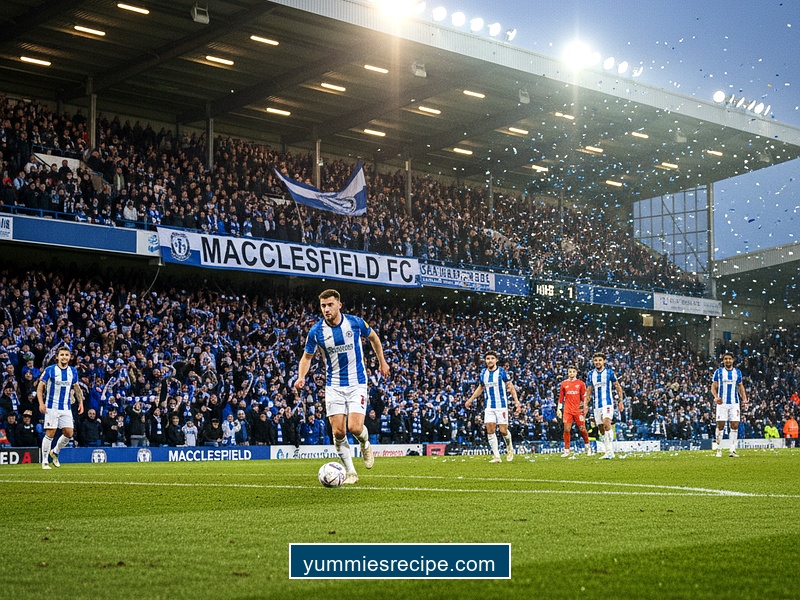
The noise inside the Leasing.com Stadium was deafening, a cacophony of terrace chants and hopeful screams that usually signifies a promotion push, but for Rob Smethurst, the real noise—the one that had threatened to consume him for years—had finally gone quiet. Standing on the touchline, watching twenty-two men chase a ball across the turf, the owner of Macclesfield FC wasn't just calculating gate receipts or pondering tactical adjustments. He was breathing. He was living. And for a man who has stared into the abyss of addiction, the simple act of being present, sober, and driven by a cause greater than himself is a victory far sweeter than any three points on a Saturday afternoon.
We often view football club ownership through a lens of cynicism. We see tycoons playing real-life Football Manager, vanity projects, or cold, calculated business ventures. But the story of Macclesfield FC is different. It is a narrative woven with raw humanity, where the resurrection of a liquidated football club became the mirror image of one man's resurrection from personal hell.
The Ghost of the Moss Rose
To understand the magnitude of Smethurst’s admission—that this club "saved his life"—we must first revisit the wreckage. When Smethurst acquired the assets of Macclesfield Town in 2020, he wasn't buying a functioning entity. He was buying a corpse. The historic club, formed in 1874, had been wound up by the High Court. The stadium was derelict, the pitch was a jungle, and the heart of the community had been ripped out.
At the same time, Smethurst was fighting his own internal liquidation. Addiction is a thief; it steals your time, your relationships, and eventually, your identity. It creates a vacuum that demands to be filled. For Smethurst, the terrifying void of addiction needed a counterweight, something heavy enough to anchor him to reality. He found it in the ruins of the Moss Rose.
"I was in a dark place. I needed something to focus on, something to get me out of bed in the morning. Macclesfield became that obsession, but a healthy one. It replaced the darkness with light."
This wasn't just a business transaction. It was a symbiotic survival pact. The club needed a savior to pay the bills and rebuild the stands; Smethurst needed a mission to keep the demons at bay. They were two broken entities, leaning on each other to stand upright.
The Savage Factor and the Public Eye
Bringing Robbie Savage into the fold as Director of Football was a masterstroke of chaos and brilliance. It brought cameras, it brought scrutiny, and it brought pressure. For a recovering addict, high-stakes pressure can be a trigger. Yet, in this cinematic arc, the pressure acted as a forge.
The visibility of the project, highlighted in the documentary series, forced accountability. Smethurst couldn't hide in the shadows when the eyes of the footballing world were watching the Phoenix rise. The banter, the arguments, the sheer emotional expenditure of running a football club provided a natural high—a dopamine hit derived from achievement rather than substance.
- The Catalyst: Purchasing the assets of a liquidated club in 2020.
- The Investment: Millions poured into stadium renovation and squad building.
- The Result: Back-to-back promotions and a revitalized community.
- The Personal Victory: A newfound purpose replacing the cycle of addiction.
A New Kind of Addiction
Is football the cure? No, that would be too simplistic. But football is perhaps the most potent distraction known to man. It demands total immersion. You cannot run a club like Macclesfield halfway. The deadlines, the transfer negotiations, the fan forums, the matchday operations—they occupy every waking thought.
Smethurst traded a destructive habit for a constructive obsession. He swapped isolation for community. Every time he walks through the town and a fan shakes his hand, thanking him for giving them their Saturdays back, it reinforces the new neural pathways in his brain. It validates his existence in a way that addiction never could. Addiction lies to you; it tells you that you are worthless. The roar of a crowd after a last-minute winner tells you that you matter.
The Wider Implications for the Game
We need to talk about what this means for the culture of football ownership. For too long, owners have been viewed as distant benefactors or villains. Smethurst’s vulnerability changes the texture of that relationship. It humanizes the boardroom.
If an owner can be open about their mental health struggles, about the fragility of their own life, it grants permission for everyone else in the ecosystem to do the same. From the manager in the dugout to the striker going through a goal drought, to the fan on the terrace masking their depression with anger—Smethurst’s story serves as a beacon. It says: You can break, but you can also rebuild.
The Final Whistle is Nowhere in Sight
Macclesfield FC is currently navigating the choppy waters of the Northern Premier League, eyeing yet another promotion. The trajectory is upward. But the true success story isn't found in the league table. It's found in the man at the helm.
Rob Smethurst didn't just save a football club from extinction. In the process of relaying the turf, installing the seats, and building a squad from scratch, he rebuilt himself. He turned a tragedy into a triumph, proving that sometimes, the only way to save yourself is to save something else first. As the Silkmen march on, they do so not just as a football team, but as a living, breathing monument to second chances.
The noise inside the Leasing.com Stadium was deafening, a cacophony of terrace chants and hopeful screams that usually signifies a promotion push, but for Rob Smethurst, the real noise—the one that had threatened to consume him for years—had finally gone quiet. Standing on the touchline, watching twenty-two men chase a ball across the turf, the owner of Macclesfield FC wasn't just calculating gate receipts or pondering tactical adjustments. He was breathing. He was living. And for a man who has stared into the abyss of addiction, the simple act of being present, sober, and driven by a cause greater than himself is a victory far sweeter than any three points on a Saturday afternoon.
We often view football club ownership through a lens of cynicism. We see tycoons playing real-life Football Manager, vanity projects, or cold, calculated business ventures. But the story of Macclesfield FC is different. It is a narrative woven with raw humanity, where the resurrection of a liquidated football club became the mirror image of one man's resurrection from personal hell.
The Ghost of the Moss Rose
To understand the magnitude of Smethurst’s admission—that this club "saved his life"—we must first revisit the wreckage. When Smethurst acquired the assets of Macclesfield Town in 2020, he wasn't buying a functioning entity. He was buying a corpse. The historic club, formed in 1874, had been wound up by the High Court. The stadium was derelict, the pitch was a jungle, and the heart of the community had been ripped out.
At the same time, Smethurst was fighting his own internal liquidation. Addiction is a thief; it steals your time, your relationships, and eventually, your identity. It creates a vacuum that demands to be filled. For Smethurst, the terrifying void of addiction needed a counterweight, something heavy enough to anchor him to reality. He found it in the ruins of the Moss Rose.
"I was in a dark place. I needed something to focus on, something to get me out of bed in the morning. Macclesfield became that obsession, but a healthy one. It replaced the darkness with light."
This wasn't just a business transaction. It was a symbiotic survival pact. The club needed a savior to pay the bills and rebuild the stands; Smethurst needed a mission to keep the demons at bay. They were two broken entities, leaning on each other to stand upright.
The Savage Factor and the Public Eye
Bringing Robbie Savage into the fold as Director of Football was a masterstroke of chaos and brilliance. It brought cameras, it brought scrutiny, and it brought pressure. For a recovering addict, high-stakes pressure can be a trigger. Yet, in this cinematic arc, the pressure acted as a forge.
The visibility of the project, highlighted in the documentary series, forced accountability. Smethurst couldn't hide in the shadows when the eyes of the footballing world were watching the Phoenix rise. The banter, the arguments, the sheer emotional expenditure of running a football club provided a natural high—a dopamine hit derived from achievement rather than substance.
- The Catalyst: Purchasing the assets of a liquidated club in 2020.
- The Investment: Millions poured into stadium renovation and squad building.
- The Result: Back-to-back promotions and a revitalized community.
- The Personal Victory: A newfound purpose replacing the cycle of addiction.
A New Kind of Addiction
Is football the cure? No, that would be too simplistic. But football is perhaps the most potent distraction known to man. It demands total immersion. You cannot run a club like Macclesfield halfway. The deadlines, the transfer negotiations, the fan forums, the matchday operations—they occupy every waking thought.
Smethurst traded a destructive habit for a constructive obsession. He swapped isolation for community. Every time he walks through the town and a fan shakes his hand, thanking him for giving them their Saturdays back, it reinforces the new neural pathways in his brain. It validates his existence in a way that addiction never could. Addiction lies to you; it tells you that you are worthless. The roar of a crowd after a last-minute winner tells you that you matter.
The Wider Implications for the Game
We need to talk about what this means for the culture of football ownership. For too long, owners have been viewed as distant benefactors or villains. Smethurst’s vulnerability changes the texture of that relationship. It humanizes the boardroom.
If an owner can be open about their mental health struggles, about the fragility of their own life, it grants permission for everyone else in the ecosystem to do the same. From the manager in the dugout to the striker going through a goal drought, to the fan on the terrace masking their depression with anger—Smethurst’s story serves as a beacon. It says: You can break, but you can also rebuild.
The Final Whistle is Nowhere in Sight
Macclesfield FC is currently navigating the choppy waters of the Northern Premier League, eyeing yet another promotion. The trajectory is upward. But the true success story isn't found in the league table. It's found in the man at the helm.
Rob Smethurst didn't just save a football club from extinction. In the process of relaying the turf, installing the seats, and building a squad from scratch, he rebuilt himself. He turned a tragedy into a triumph, proving that sometimes, the only way to save yourself is to save something else first. As the Silkmen march on, they do so not just as a football team, but as a living, breathing monument to second chances.