
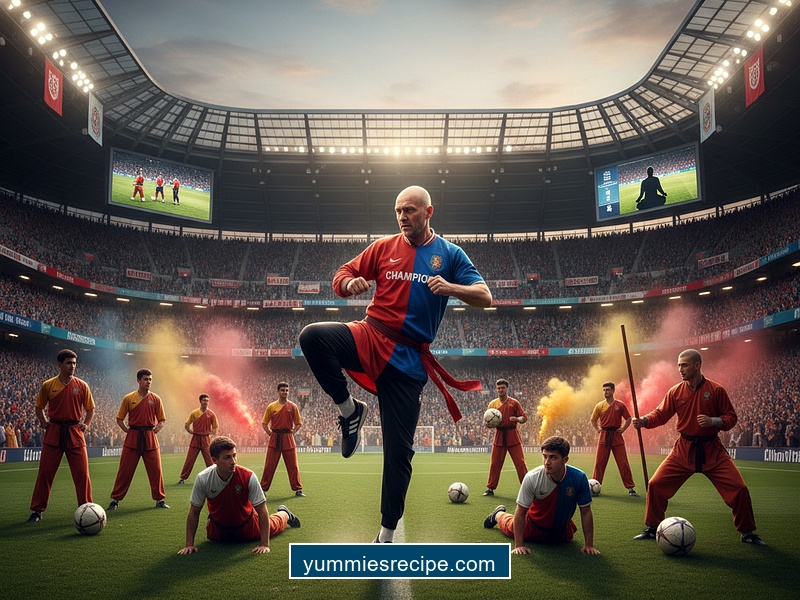
Let's cut through the noise. When you hear about a former Premier League or Championship coach leaving the dugout, the script usually involves a lucrative punditry gig in Qatar, a golf tour in the Algarve, or a discreet hiatus before the inevitable merry-go-round spins them back into a job at Sunderland or Stoke. It rarely involves shaving one's head, donning saffron robes, and meditating on a mountain. Yet, here we are with Johan Mjallby.
The big Swede, a man who once looked at Henrik Larsson and Zlatan Ibrahimovic in the eye and told them where to stand, has traded the tactical whiteboard for the ancient scrolls. This isn't a PR stunt. My sources close to the former Bolton assistant suggest this aligns perfectly with the man’s psychological profile. Mjallby never did things by halves. On the pitch, he was granite. Off it, he is now seeking a level of discipline that modern football—with its player power and agent-led chaos—simply cannot provide.
The Psychology of the Pivot: Why Shaolin?
We need to look deeper than the "quirky news" angle. Why does a man with Mjallby’s CV—three SPL titles, two Scottish Cups, and a stint managing in the brutal reality of the English Championship—turn to martial arts?
Management is a grinder. Mjallby spent the 2014-15 season alongside Neil Lennon at Bolton Wanderers. Anyone who remembers that period at the Macron Stadium knows it was less about football and more about crisis management. Financial instability, a disillusioned squad, and the crushing weight of expectation in the second tier can break you.
The pivot to Shaolin training is likely a reaction to the loss of control managers feel today. In the temple, if you don't hold the pose, you fail. It is binary. It is fair. In the Championship, you can do everything right tactically, and your goalkeeper drops a clanger, or the owner fails to pay the wages, and you get sacked. Mjallby is reclaiming his agency. He is swapping the uncontrollables of the transfer market for the absolute control of the body and mind. It is the ultimate defensive block—not against a striker, but against the chaos of the modern world.
The Enforcer's Legacy: Contextualizing the Toughness
To understand the Monk, you must understand the Monster (complimentary) that dominated Scottish football. Mjallby wasn't a modern ball-playing centre-half who worried about his pass completion percentage in the final third. He was an eliminator.
During the Martin O'Neill era at Celtic, Mjallby formed part of a defensive unit that didn't just stop goals; they intimidated opposition forwards into submission. Alongside Bobo Balde and Joos Valgaeren, Mjallby represented a physicality that has largely been legislated out of the game today. His transition to martial arts is a logical progression. He has always been a physical specimen who thrived on combat. The dojo is simply a cleaner version of the penalty box during an Old Firm derby in 2002.
The Stat Pack: The "Iron Curtain" Years
We often view these stories through rose-tinted glasses, but the data backs up the intensity Mjallby brought to the field. His six-year tenure at Celtic was marked by dominance.
| Metric | Details | Impact Analysis |
|---|---|---|
| Celtic Appearances | 144 (approx.) | Consistent starter during the O'Neill Golden Era. |
| Major Honors | 3x SPL, 2x Scottish Cup, 2x League Cup | A serial winner; developed the "winning mentality" required for monk discipline. |
| International Caps | 49 (Sweden) | Captained his country at the 2002 World Cup. Leadership credentials are elite. |
| Coaching Record (Asst) | Celtic, Bolton Wanderers | Experience in high-pressure environments led to this seek for balance. |
Fan Pulse: Confusion Meets Respect
Scanning the forums and the sentiment coming out of the Green Brigade, the reaction is hardly one of shock. It's more a nod of validation. The general consensus among the Parkhead faithful is: "Of course Mjallby is becoming a Shaolin monk. He probably thinks the training is too soft."
"If he comes back to management after this, God help the fourth official. The man was scary enough in a suit. Imagine him with Chi energy." — *Celtic Underground Forum User*
Down in Bolton, the mood is slightly different. The Lennon/Mjallby era is viewed with a mixture of regret and frustration due to the club's financial implosion at the time. However, there is a begrudging respect for Mjallby's refusal to fade into the background. In a sport full of bland personalities and media-trained robots, Mjallby remains an original.
The Long-Term Play: Will He Return?
The question on the lips of agents and sporting directors should be: What happens when he finishes? Football is currently obsessed with "marginal gains" and psychological fortitude. We see managers hiring sleep coaches, breathing specialists, and set-piece gurus.
If Johan Mjallby returns to the technical area armed with the mental resilience of a Shaolin monk, he offers something unique. He offers a calmness in the storm that the likes of Jurgen Klopp and Pep Guardiola spend millions trying to synthesize. While others are playing checkers with formation tweaks, Mjallby might just be mastering the art of mental warfare.
This isn't a retirement. Knowing Mjallby, this is pre-season. The rest of the league should probably be worried.
Let's cut through the noise. When you hear about a former Premier League or Championship coach leaving the dugout, the script usually involves a lucrative punditry gig in Qatar, a golf tour in the Algarve, or a discreet hiatus before the inevitable merry-go-round spins them back into a job at Sunderland or Stoke. It rarely involves shaving one's head, donning saffron robes, and meditating on a mountain. Yet, here we are with Johan Mjallby.
The big Swede, a man who once looked at Henrik Larsson and Zlatan Ibrahimovic in the eye and told them where to stand, has traded the tactical whiteboard for the ancient scrolls. This isn't a PR stunt. My sources close to the former Bolton assistant suggest this aligns perfectly with the man’s psychological profile. Mjallby never did things by halves. On the pitch, he was granite. Off it, he is now seeking a level of discipline that modern football—with its player power and agent-led chaos—simply cannot provide.
The Psychology of the Pivot: Why Shaolin?
We need to look deeper than the "quirky news" angle. Why does a man with Mjallby’s CV—three SPL titles, two Scottish Cups, and a stint managing in the brutal reality of the English Championship—turn to martial arts?
Management is a grinder. Mjallby spent the 2014-15 season alongside Neil Lennon at Bolton Wanderers. Anyone who remembers that period at the Macron Stadium knows it was less about football and more about crisis management. Financial instability, a disillusioned squad, and the crushing weight of expectation in the second tier can break you.
The pivot to Shaolin training is likely a reaction to the loss of control managers feel today. In the temple, if you don't hold the pose, you fail. It is binary. It is fair. In the Championship, you can do everything right tactically, and your goalkeeper drops a clanger, or the owner fails to pay the wages, and you get sacked. Mjallby is reclaiming his agency. He is swapping the uncontrollables of the transfer market for the absolute control of the body and mind. It is the ultimate defensive block—not against a striker, but against the chaos of the modern world.
The Enforcer's Legacy: Contextualizing the Toughness
To understand the Monk, you must understand the Monster (complimentary) that dominated Scottish football. Mjallby wasn't a modern ball-playing centre-half who worried about his pass completion percentage in the final third. He was an eliminator.
During the Martin O'Neill era at Celtic, Mjallby formed part of a defensive unit that didn't just stop goals; they intimidated opposition forwards into submission. Alongside Bobo Balde and Joos Valgaeren, Mjallby represented a physicality that has largely been legislated out of the game today. His transition to martial arts is a logical progression. He has always been a physical specimen who thrived on combat. The dojo is simply a cleaner version of the penalty box during an Old Firm derby in 2002.
The Stat Pack: The "Iron Curtain" Years
We often view these stories through rose-tinted glasses, but the data backs up the intensity Mjallby brought to the field. His six-year tenure at Celtic was marked by dominance.
| Metric | Details | Impact Analysis |
|---|---|---|
| Celtic Appearances | 144 (approx.) | Consistent starter during the O'Neill Golden Era. |
| Major Honors | 3x SPL, 2x Scottish Cup, 2x League Cup | A serial winner; developed the "winning mentality" required for monk discipline. |
| International Caps | 49 (Sweden) | Captained his country at the 2002 World Cup. Leadership credentials are elite. |
| Coaching Record (Asst) | Celtic, Bolton Wanderers | Experience in high-pressure environments led to this seek for balance. |
Fan Pulse: Confusion Meets Respect
Scanning the forums and the sentiment coming out of the Green Brigade, the reaction is hardly one of shock. It's more a nod of validation. The general consensus among the Parkhead faithful is: "Of course Mjallby is becoming a Shaolin monk. He probably thinks the training is too soft."
"If he comes back to management after this, God help the fourth official. The man was scary enough in a suit. Imagine him with Chi energy." — *Celtic Underground Forum User*
Down in Bolton, the mood is slightly different. The Lennon/Mjallby era is viewed with a mixture of regret and frustration due to the club's financial implosion at the time. However, there is a begrudging respect for Mjallby's refusal to fade into the background. In a sport full of bland personalities and media-trained robots, Mjallby remains an original.
The Long-Term Play: Will He Return?
The question on the lips of agents and sporting directors should be: What happens when he finishes? Football is currently obsessed with "marginal gains" and psychological fortitude. We see managers hiring sleep coaches, breathing specialists, and set-piece gurus.
If Johan Mjallby returns to the technical area armed with the mental resilience of a Shaolin monk, he offers something unique. He offers a calmness in the storm that the likes of Jurgen Klopp and Pep Guardiola spend millions trying to synthesize. While others are playing checkers with formation tweaks, Mjallby might just be mastering the art of mental warfare.
This isn't a retirement. Knowing Mjallby, this is pre-season. The rest of the league should probably be worried.