
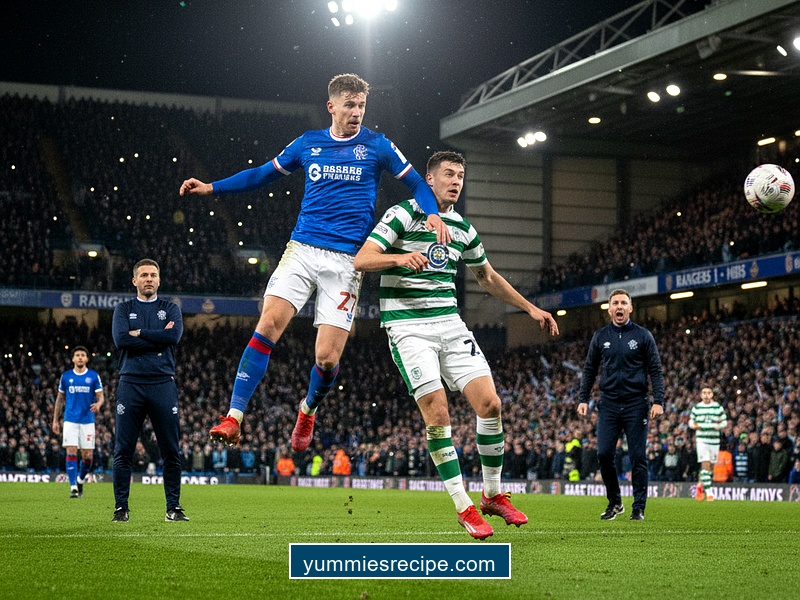
The fixture list has thrown up a distinct tactical divergence this weekend. While the casual observer looks at the league table, the analyst looks at the heat maps. Monday night’s clash between Rangers and Hibernian is not merely a contest of historic rivalry; it is a collision of two fundamentally opposing philosophies regarding space utilization. Furthermore, the ongoing narrative surrounding Livingston’s David Martindale and the technical evolution at Heart of Midlothian provides a perfect case study on the struggle between pragmatism and idealism in Scottish football.
We are seeing a shift in the Premiership's tactical meta. The days of 4-4-2 attrition are fading, replaced by complex pressing triggers and hybrid defensive shapes. This weekend offers the clearest evidence yet of who is adapting and who is relying on outdated mechanics.
Rangers vs. Hibs: The Geometry of the Flank
To understand the threat Hibernian poses to Rangers, one must ignore the possession statistics. Rangers will dominate the ball; that is a given. The critical metric here is PPDA (Passes Allowed Per Defensive Action) and the zone of recovery. Rangers’ system relies heavily on the aggressive positioning of their full-backs. They act essentially as auxiliary wingers, pinning the opposition back. However, this structural choice leaves massive acreage in the channels—specifically the zones behind the advancing full-back and outside the central defender.
Hibs have developed a mechanism to exploit this. Instead of building slowly from the back—which invites the Rangers high press—they are looking for early verticality. The objective is to bypass the Rangers midfield block entirely. If Rangers fail to secure their "rest defense" (the structure maintained while attacking), Hibs' transition pace becomes lethal. The battle will be won or lost in the half-spaces. If Rangers’ double pivot can suffocate the counter-attack before it crosses the halfway line, they win comfortably. If they are bypassed, their high line becomes a suicide pact.
The Martindale Block: A Masterclass in Nullification
David Martindale is often reduced to caricatures regarding "fight" and "desire," which does a disservice to the tactical rigour he instills at Livingston. Martindale manages the most geometrically disciplined low block in the division. The focus is on denying central penetration.
Livingston creates what analysts call a "U-shape" circulation map for their opponents. They allow the opposition center-backs to have the ball. They allow the full-backs to have the ball near the touchline. But the moment the ball enters Zone 14 (the area just outside the penalty box), the trap snaps shut. It is a system of compression.
"Possession without penetration is just aesthetics. Martindale trades aesthetics for points."
The tactical breakdown of Livingston is simple but effective: 5-4-1 out of possession, shifting to a 3-4-3 in transition. The use of the "spaghettiad" (the artificial surface) aids this by ensuring the ball runs true for defensive clearances and quick ground passes, neutralizing the erratic bounces that often aid chaotic attacking play. Martindale’s approach forces teams to resort to crosses from deep—statistically the least efficient way to score in modern football.
Heart of Midlothian: The Continental disconnect
The mention of Claudio Braga in the context of Hearts' technical setup highlights a broader schism in Scottish football management: the integration of continental methodology into a league defined by physicality. Whether through youth development or first-team coaching, the introduction of Dutch or Portuguese tactical periodization often hits a wall when faced with the raw verticality of the SPFL.
Hearts often find themselves caught between two identities. They possess the budget to play expansive, possession-based football, yet they frequently revert to direct play when the pressure mounts. The role of a technical figure like Braga is theoretically to bridge this gap—to implement a "way of playing" that transcends the manager. However, data suggests that Hearts struggle against teams that refuse to engage in a tactical chess match. When the game becomes chaotic, the "structure" dissolves.
The challenge for the coaching staff in Gorgie is recruitment alignment. You cannot sign players suited for a high-pressing 4-3-3 and then ask them to defend the edge of their own box. The strategic dissonance at Hearts is the variable that makes their season so volatile. They need to commit fully to one philosophy, rather than oscillating between purism and pragmatism week to week.
The Stat Pack: Efficiency Over Volume
The modern game is defined by efficiency. Looking at the comparative data between these tactical setups reveals why possession is a liar. Livingston, despite seeing less of the ball, often generates higher quality chances (xG per shot) because they attack into space, whereas Rangers and Hearts often face a set defense.
| Metric | Rangers (High Press) | Livingston (Low Block) | Tactical Implication |
|---|---|---|---|
| Avg Possession | 62% | 38% | Control vs. Reaction |
| Passes Per Defensive Action (PPDA) | Low (Aggressive) | High (Passive) | Pressing Intensity |
| xG per Shot | 0.11 | 0.14 | Shot Quality |
Fan Pulse: The Anxiety of Expectation
The mood among the support bases reflects the tactical realities on the pitch. In Govan, the atmosphere is brittle. The fans understand the need for dominance, but their patience for sterile possession is at an all-time low. They demand verticality and risk-taking, which often conflicts with the manager's desire for control. When the sideways passing starts, the groan from the Ibrox stands is audible, creating a negative feedback loop that empowers the opposition.
Conversely, the Livingston faithful—though fewer in number—have bought into the Martindale doctrine. There is an appreciation for the 'clean sheet mentality.' They do not expect beautiful football; they expect survival and the occasional bloody nose given to the Glasgow giants. For Hearts, the feeling is one of confusion. The fanbase is desperate for a clear identity, tired of oscillating between being a "soft touch" and a physical team. They want the tactical Continentalism promised by appointments like Braga to translate into actual points, not just training ground philosophy.
Monday night is not just a game; it is a referendum on these competing st
The fixture list has thrown up a distinct tactical divergence this weekend. While the casual observer looks at the league table, the analyst looks at the heat maps. Monday night’s clash between Rangers and Hibernian is not merely a contest of historic rivalry; it is a collision of two fundamentally opposing philosophies regarding space utilization. Furthermore, the ongoing narrative surrounding Livingston’s David Martindale and the technical evolution at Heart of Midlothian provides a perfect case study on the struggle between pragmatism and idealism in Scottish football.
We are seeing a shift in the Premiership's tactical meta. The days of 4-4-2 attrition are fading, replaced by complex pressing triggers and hybrid defensive shapes. This weekend offers the clearest evidence yet of who is adapting and who is relying on outdated mechanics.
Rangers vs. Hibs: The Geometry of the Flank
To understand the threat Hibernian poses to Rangers, one must ignore the possession statistics. Rangers will dominate the ball; that is a given. The critical metric here is PPDA (Passes Allowed Per Defensive Action) and the zone of recovery. Rangers’ system relies heavily on the aggressive positioning of their full-backs. They act essentially as auxiliary wingers, pinning the opposition back. However, this structural choice leaves massive acreage in the channels—specifically the zones behind the advancing full-back and outside the central defender.
Hibs have developed a mechanism to exploit this. Instead of building slowly from the back—which invites the Rangers high press—they are looking for early verticality. The objective is to bypass the Rangers midfield block entirely. If Rangers fail to secure their "rest defense" (the structure maintained while attacking), Hibs' transition pace becomes lethal. The battle will be won or lost in the half-spaces. If Rangers’ double pivot can suffocate the counter-attack before it crosses the halfway line, they win comfortably. If they are bypassed, their high line becomes a suicide pact.
The Martindale Block: A Masterclass in Nullification
David Martindale is often reduced to caricatures regarding "fight" and "desire," which does a disservice to the tactical rigour he instills at Livingston. Martindale manages the most geometrically disciplined low block in the division. The focus is on denying central penetration.
Livingston creates what analysts call a "U-shape" circulation map for their opponents. They allow the opposition center-backs to have the ball. They allow the full-backs to have the ball near the touchline. But the moment the ball enters Zone 14 (the area just outside the penalty box), the trap snaps shut. It is a system of compression.
"Possession without penetration is just aesthetics. Martindale trades aesthetics for points."
The tactical breakdown of Livingston is simple but effective: 5-4-1 out of possession, shifting to a 3-4-3 in transition. The use of the "spaghettiad" (the artificial surface) aids this by ensuring the ball runs true for defensive clearances and quick ground passes, neutralizing the erratic bounces that often aid chaotic attacking play. Martindale’s approach forces teams to resort to crosses from deep—statistically the least efficient way to score in modern football.
Heart of Midlothian: The Continental disconnect
The mention of Claudio Braga in the context of Hearts' technical setup highlights a broader schism in Scottish football management: the integration of continental methodology into a league defined by physicality. Whether through youth development or first-team coaching, the introduction of Dutch or Portuguese tactical periodization often hits a wall when faced with the raw verticality of the SPFL.
Hearts often find themselves caught between two identities. They possess the budget to play expansive, possession-based football, yet they frequently revert to direct play when the pressure mounts. The role of a technical figure like Braga is theoretically to bridge this gap—to implement a "way of playing" that transcends the manager. However, data suggests that Hearts struggle against teams that refuse to engage in a tactical chess match. When the game becomes chaotic, the "structure" dissolves.
The challenge for the coaching staff in Gorgie is recruitment alignment. You cannot sign players suited for a high-pressing 4-3-3 and then ask them to defend the edge of their own box. The strategic dissonance at Hearts is the variable that makes their season so volatile. They need to commit fully to one philosophy, rather than oscillating between purism and pragmatism week to week.
The Stat Pack: Efficiency Over Volume
The modern game is defined by efficiency. Looking at the comparative data between these tactical setups reveals why possession is a liar. Livingston, despite seeing less of the ball, often generates higher quality chances (xG per shot) because they attack into space, whereas Rangers and Hearts often face a set defense.
| Metric | Rangers (High Press) | Livingston (Low Block) | Tactical Implication |
|---|---|---|---|
| Avg Possession | 62% | 38% | Control vs. Reaction |
| Passes Per Defensive Action (PPDA) | Low (Aggressive) | High (Passive) | Pressing Intensity |
| xG per Shot | 0.11 | 0.14 | Shot Quality |
Fan Pulse: The Anxiety of Expectation
The mood among the support bases reflects the tactical realities on the pitch. In Govan, the atmosphere is brittle. The fans understand the need for dominance, but their patience for sterile possession is at an all-time low. They demand verticality and risk-taking, which often conflicts with the manager's desire for control. When the sideways passing starts, the groan from the Ibrox stands is audible, creating a negative feedback loop that empowers the opposition.
Conversely, the Livingston faithful—though fewer in number—have bought into the Martindale doctrine. There is an appreciation for the 'clean sheet mentality.' They do not expect beautiful football; they expect survival and the occasional bloody nose given to the Glasgow giants. For Hearts, the feeling is one of confusion. The fanbase is desperate for a clear identity, tired of oscillating between being a "soft touch" and a physical team. They want the tactical Continentalism promised by appointments like Braga to translate into actual points, not just training ground philosophy.
Monday night is not just a game; it is a referendum on these competing st