
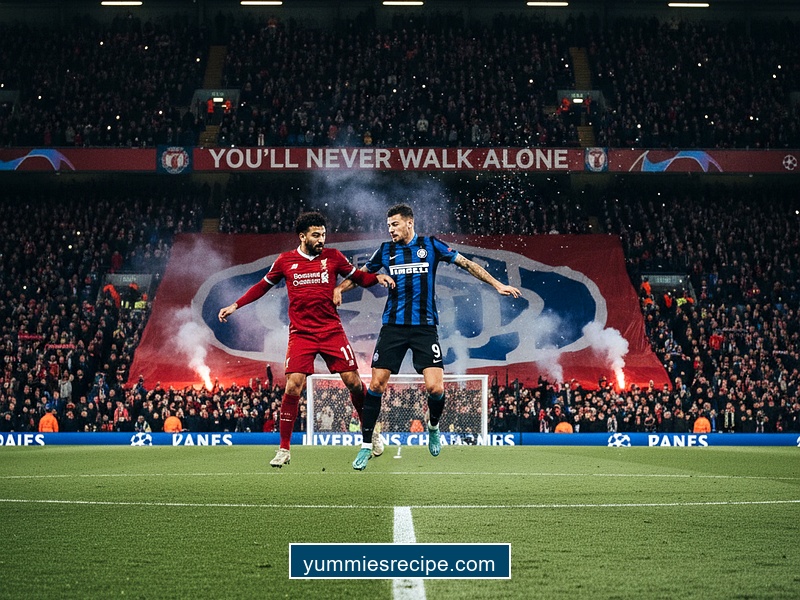
The concrete cathedrals of Milan do not forgive. When the mist rolls off the plains of Lombardy and settles into the spiraling ramps of the San Siro, it brings a chill that penetrates even the most hardened veterans. For Mohamed Salah, Matchday 6 of the UEFA Champions League is not merely a fixture on a spreadsheet or a variable in an expert prediction model. It is a reckoning. The snippet from the newswire asks a simple, almost sterile question: "Can Liverpool turn it around vs. Inter?" But beneath that headline lies a far more personal, visceral struggle. This is about a king whose crown has begun to slip, returning to the land that made him, desperately trying to prove that the sun has not yet set on his empire.
We have watched Salah for years. We have seen the electric pace, the curling finishes that defy physics, and the smile that seemed to power the floodlights at Anfield. Yet, recent weeks have painted a different portrait. The explosiveness seems dampened by a split-second of hesitation. The telepathic link with his teammates appears plagued by static. Liverpool enters this match needing a savior, and for the first time in half a decade, there is a legitimate fear that their Egyptian deity may be mortal after all.
The Ghost of Italian Nights
To understand the weight of this night, one must look backward. Before he was the Icon of Anfield, Salah was the erratic genius of Florence and the Wolf of Rome. Italy is where he learned the dark arts of tactical manipulation. Calcio taught him that space is not given; it is stolen. Returning to play Inter Milan is a journey into his own past. But nostalgia is a dangerous drug for an athlete. It clouds the reality of the present.
The narrative surrounding this Liverpool squad is one of fragility. The defense leaks, the midfield stutters, and the press questions the manager’s grip on the wheel. In such chaos, the superstar usually absorbs the pressure. He becomes the lightning rod. But Salah’s current form suggests a player fighting his own body as much as the opposition. The "turnaround" the pundits speak of requires more than a tactical shift; it requires a resurrection.
"Legends don't die in the light. They fade in the gray afternoons of mediocrity. Tonight, under the lights of the Giuseppe Meazza, Salah must decide if he is still the author of his own story."
Inter Milan, the formidable Nerazzurri, smells blood. They are a team built on granite, disciplined and ferocious. They know that to stop Liverpool, you simply sever the head of the snake. They will double-team him. They will kick him. They will whisper in his ear that his time is done. For a player who thrives on confidence and rhythm, this hostility can either break his spirit or ignite a fire that has been smoldering for months.
A Statistical Decline or a Strategic Pause?
The critics argue that the decline is empirical. They point to the data. His dribble success rate has dipped. His isolation play—once the most terrifying sight in world football—is now often neutralized by younger, faster fullbacks. Is this the tragedy of the aging athlete playing out in real-time? Or is this the calm before the violence?
| Metric | The Peak Years (Avg) | Current Campaign | Trend Analysis |
|---|---|---|---|
| Dribbles Completed / 90 | 2.8 | 1.4 | Significant Drop |
| Shots Inside Box | 3.5 | 2.1 | Worrying |
| Chance Creation | High Volume | Elite | Evolution (Playmaker) |
The table tells a story of evolution, not necessarily extinction. Salah is no longer the winger who burns the touchline. He has drifted inside, becoming a pseudo-number 10, a creator who conserves energy for the lethal moment. However, Liverpool's current crisis demands the old Salah. They need the anarchy. Against a rigid Inter structure, a playmaker is easily marked out of the game. A chaotic force of nature, however, cannot be calculated.
This is where the tragedy lies. The team needs the version of Salah that may no longer exist. He is being asked to summon ghosts. If he fails to turn the defender, if he is muscled off the ball by Alessandro Bastoni, the groans from the traveling Kop will be deafening. The hero's fall is always louder than his rise.
The Lonely Walk to Redemption
The stakes of Matchday 6 extend beyond the points table. They reach into the very soul of the club. Liverpool is a team in transition, caught between two eras. Salah is the bridge. If the bridge collapses, the rebuild takes years. If the bridge holds, glory remains possible. He walks onto the pitch at San Siro carrying this architectural burden.
Imagine the scene: 80th minute. The score is deadlocked. The Italian crowd is whistling, a piercing sound that disorients the mind. Salah receives the ball on the right flank. In 2018, he cuts inside and curls it top bin without thinking. In 2024, does he hesitate? Does he look for the pass? This specific moment will define the season. It is the moment of redemption or the confirmation of downfall.
Great players do not accept the dying of the light. They rage against it. Salah’s career has been defined by proving people wrong. Chelsea rejected him; he conquered the Premier League. Egypt needed a penalty to reach the World Cup; he scored it with a laser pointer in his eye. Now, the whispers say he is finished, that Liverpool cannot "turn it around" because their talisman is broken.
<p style="font-size: 1.125rem; line-height: 1.8; color: