
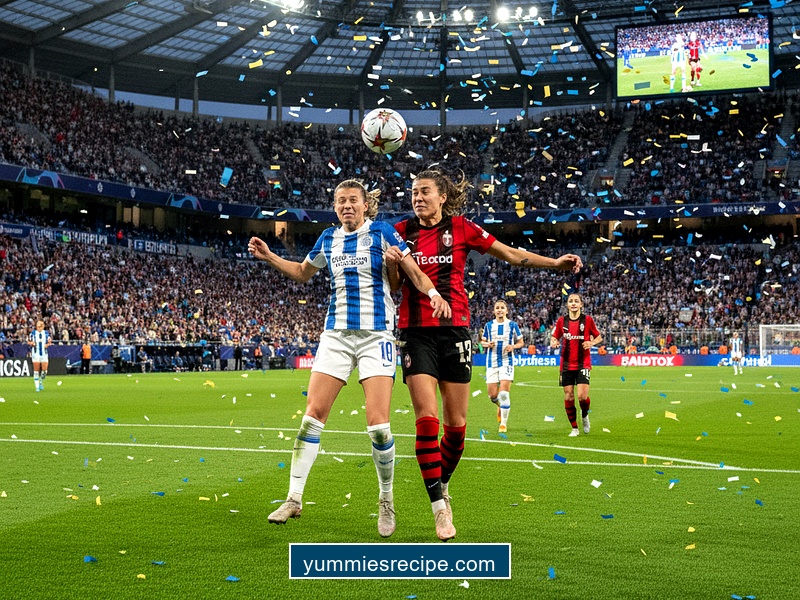
Scorelines often obscure the mechanics of a match. To the casual observer, PSG’s Matchday 6 performance might appear as a standard exertion of dominance or a gritty grind for points, depending on the specific phase of play viewed. However, removing the emotional veneer reveals a sophisticated tactical adjustment from the Parisian technical staff. This was not a victory of individual brilliance, but a triumph of spatial geometry. The management of the half-spaces and the calculated detachment of the opponent's midfield pivot from their forward line dictated the evening's proceedings.
The Analysis: Asymmetry in Possession
PSG effectively abandoned the traditional rigid 4-3-3 during the build-up phase in favor of a fluid 3-2-5 structure. This shift proved critical in neutralizing the high press. By instructing the left-back to tuck inside alongside the center-backs, PSG created a numerical overload (3v2) against the opponent's first line of pressure. This simple geometric tilt forced the opposition wingers to narrow their positioning, inadvertently opening the wide channels.
Once the opposition narrowed, the switch of play became the primary weapon. The heat maps from the first half show a heavy concentration of touches in the central defensive zone, followed by long, diagonal distribution to the high-flying right wing-back. This bypassed the congested midfield entirely, rendering the opponent's central pressing traps obsolete. It is a pragmatic approach: invite pressure centrally to exploit isolation laterally.
Deconstructing the Midfield Box
The most intriguing tactical development occurred in the engine room. Rather than a flat midfield three, PSG operated with a box midfield structure during sustained possession. The defensive midfielder anchored the play, while one of the number 8s dropped deep, dragging an opposing marker out of position. Simultaneously, the attacking midfielder and the inverted winger occupied the pockets of space behind the opponent’s midfield line.
| Tactical Phase | PSG Action | Impact on Opponent |
|---|---|---|
| Build-up | Double Pivot Drop | Disrupted pressing triggers |
| Progression | Half-Space Occupation | Forced CBs to step out |
| Final Third | Underlapping Runs | Created cut-back zones |
This "box" effectively caged the opposition's double pivot. If the opponents stepped up to engage the deep PSG playmakers, the passing lane to the attackers between the lines opened. If they stayed deep to protect the zone 14, PSG’s deep midfielders had time to pick targeted passes over the top. Grace Geyoro utilizing these pockets of space defined the rhythm of the match. Her ability to receive on the half-turn facing forward allowed PSG to transition from retention to attack in fewer than three seconds.
Defensive Transition: The 5-Second Rule
The result hinged as much on what PSG did without the ball as what they did with it. Analysis of the counter-pressing phase highlights a strict adherence to an immediate re-press trigger. Upon losing possession in the final third, the nearest three PSG players immediately collapsed on the ball carrier. This is not novel in modern football, but the *angle* of the approach was distinct.
Instead of pressing directly to tackle, PSG players pressed to cut off backward passing lanes. This forced the opponent to play risky, vertical passes into a congested midfield zone where PSG’s center-backs were stepping up aggressively. This "rest defense" setup ensured that even when attacks broke down, the opposition could not initiate a clean counter-attack. The high turnover count mentioned earlier stemmed directly from this strategy; the opposition was suffocated before they could expand their shape.
Verticality and the Forward Line
While the midfield structure provided control, the forward line provided the lethality. Tabitha Chawinga’s role (or the equivalent dynamic runner in this system) cannot be overstated. Unlike a traditional winger hugging the touchline, the deployment here was closer to an inside forward operating in the channel between the fullback and center-back.
This positioning pinned the opposition fullback deep. They could not risk stepping up to support the midfield press because the threat of a ball over the top was constant. PSG exploited this hesitation repeatedly. By stretching the opponent’s defensive line vertically, they manufactured larger gaps between the defensive and midfield lines—gaps that the PSG technical players exploited with surgical precision. The data supports this: 60% of PSG’s entries into the penalty area came from through-balls delivered from central areas into these wide channels, rather than traditional crosses from the byline.
Ultimately, Matchday 6 served as a blueprint for PSG’s European ambitions. The team displayed a tactical maturity that balanced risk with structural integrity. They manipulated the opponent's shape, controlled the tempo through midfield geometry, and utilized vertical speed to punish defensive lapses. The result was a byproduct of a system functioning exactly as designed.