
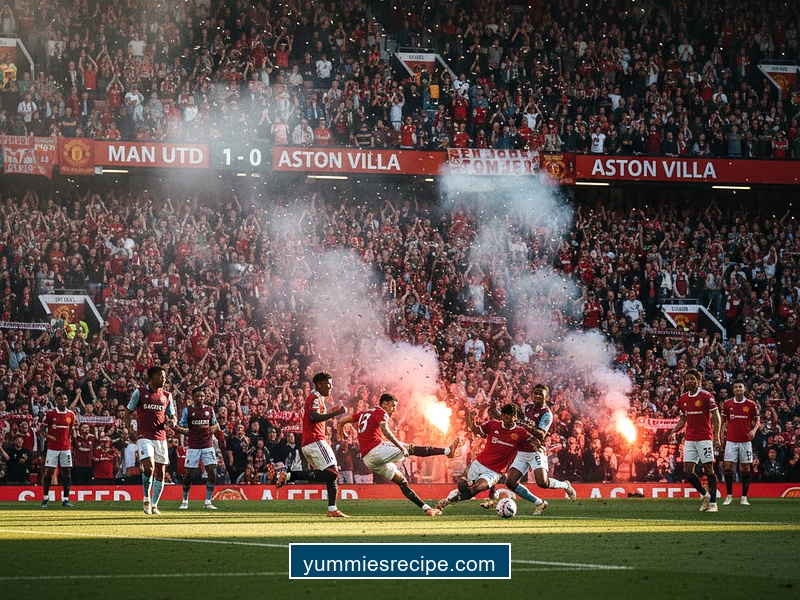
The line between Old Trafford immortality and a tragic exit has never looked thinner for Marcus Rashford as Manchester United prepares for a defining trip to the Midlands. Once the boy prince who carried the hopes of a decaying empire on his shoulders, the Wythenshawe native now finds himself fighting for relevance in a team that seemingly operates better without his brooding presence. Sunday’s clash at Villa Park is no longer just a tactical puzzle for the manager; it is a referendum on the career of United’s most enigmatic son.
| Metric | The Peak (2022/23) | The Slump (Current Trend) | Differential |
|---|---|---|---|
| Goals per 90 | 0.65 | 0.28 | -57% |
| Succ. Dribbles | 2.1 | 1.2 | -43% |
| Big Chances Missed | High Volume | Low Confidence | Negative Shift |
| Sprints per Match | 18.5 | 13.2 | -28% |
Why The Numbers Matter
Statistics often lie, but in Rashford's case, they scream a painful truth. The drop in sprint metrics and successful dribbles points less to a physical decline and more to a psychological paralysis. The differential highlights a player who has stopped trusting his instincts. Against a team like Aston Villa, who play with a razor-thin high defensive line, a hesitant forward is a liability. The data suggests that the Rashford of old—the one who terrorized defenders with direct running—has been replaced by a figure who overthinks every touch, turning instinct into hesitation.
The Heavy Crown of the Local Hero
There is a unique tragedy reserved for the local hero. The foreign mercenary is allowed to fail; they simply pack their bags and move to Italy or Spain. But for Marcus Rashford, failure is personal. It happens in his backyard. Every misplaced pass feels like a betrayal of the city that raised him. When Manchester United announced the lineup discussions for the Aston Villa clash, the subtext was screamingly loud: does the manager trust the local boy to save his own skin?
We have watched him grow from a fearless teenager who scored twice on his debut against Midtjylland into a man burdened by the state of the institution he represents. He was supposed to be the face of the new era, the Mbappé of Manchester. Instead, he has become the barometer for the club’s dysfunction. When United is chaotic, Rashford is chaotic. When the mood at Old Trafford is dour, Rashford’s shoulders slump, his eyes fixate on the turf, and he becomes a ghost in the machine.
"He carries the weight of the badge like a suit of armor that has rusted shut. The talent is there, but the joy has been extinguished."
The upcoming fixture against Aston Villa is not merely a game for three points. It is a stage set for either redemption or further condemnation. Villa Park is a hostile, raucous amphitheater. Under Unai Emery, Villa has become everything United is not: cohesive, structured, and relentlessly energetic. For Rashford, this environment presents the ultimate test of character. He does not just need to play well; he needs to look like he *wants* to be there.
Tactical Suicide or Masterstroke?
The debate surrounding the starting XI is fierce. Pundits and fans alike argue over the left-wing position. Alejandro Garnacho offers the fire and fury of youth—he runs until his lungs burn, he tracks back, he embodies the fight the fans crave. Rashford, conversely, offers moments of brilliance interspersed with long periods of drift. To start Rashford at Villa Park is a gamble of the highest order.
If the manager selects him, it is a challenge issued directly to Rashford’s ego. It says: "Here is the space you crave. Here is the opponent that suits your style. Show us you are still the King." A benching, however, would signal a shift in the hierarchy that might be irreversible. It would confirm that the club is ready to move past the era of relying on individual brilliance and instead favor the collective industry of players like Garnacho.
The Specter of the 'What If'
There is a tragic element to Rashford’s current existence. We see flashes of the player he was supposed to be—the thunderbolt against Manchester City, the clever runs against Arsenal. But these moments feel like flickering candles in a storm. The consistency required of a world-class athlete eludes him.
Against Villa, he faces Matty Cash or Ezri Konsa, defenders who relish a physical battle. If Rashford engages, if he uses his body and his pace to dominate, he can turn the tide of public opinion in ninety minutes. Football fans are fickle; a brace at Villa Park washes away months of lethargy. But if he is bullied, if he throws his hands up in frustration after losing possession, the narrative will harden into concrete.
The beauty of sport lies in its capacity for instant redemption. The script is not yet finished. Rashford stands at the precipice. One step forward, and he reclaims his status as United’s talisman. One step back, and he risks becoming a cautionary tale of talent suffocated by expectation. Sunday is not just a match; it is a battle for the soul of a player who has given everything to his club, yet somehow, still owes them more.
The lineup sheet will be released an hour before kickoff. When his name appears—or doesn't—the noise will begin. But the real silence must come from Rashford himself. He must silence the doubts, the critics, and the demons in his own head. Villa Park awaits, and it will take no prisoners.